
 About Us
 Why K12?
 Safety Needs
 How Students Succeed
 FAQs
FAQs Online Elementary School
 Online Middle School
 Career and College Prep
 Online High School
 Student Clubs
 Career and College Services
 Inside the Online Classroom
 A Day in the Life
 Social & Extracurricular
 Advice, Tips & Inspiration
 Benefits for Life
 Enroll
 All School Options
 Need More Help?
How can students with ADHD receive support and succeed in online school?
Discover how online schools support students with ADHD through flexible schedules, accommodations, structure, and learning tools.

Table of Contents
Attention-deficit/hyperactivity disorder (ADHD) affects students differently. Some students with ADHD struggle in traditional classrooms filled with constant noise, transitions, and distractions. Others benefit from the structure and social interaction that those environments provide. That’s why many parents ask an important question before considering virtual learning: How can students with ADHD receive support and succeed in online school?
The answer is often yes, especially when students receive the right combination of structure, flexibility, communication, and support. Online schools may support students with ADHD through flexible pacing, recorded lessons, movement breaks, visual schedules, teacher check-ins, and individualized accommodations that support focus and organization.
Because every student’s experience is unique, online learning can feel empowering for some students and frustrating for others. Understanding both the benefits and challenges of online school can help families decide whether virtual learning may be a good fit.
Benefits of Online Learning for Students With ADHD
For certain students, traditional classrooms can create constant sensory and attentional overload. Some children may spend the day navigating difficult challenges, including:
- Crowded hallways
- Classroom interruptions
- Social pressures
- Loud environments
- Frequent transitions
- Rigid schedules
In some cases, those external demands make it harder for students with ADHD to focus on learning itself. Online school can sometimes reduce those distractions by providing more control over the learning environment. For example, some students focus better when they can work in a quieter room, move around between lessons, or replay instructions more than once.
Flexible Learning Environments
One of the biggest advantages of online school for ADHD students is flexibility. In online school, students may be able to take movement breaks, adjust seating, use fidgets privately, work in quieter environments, pace assignments to meet their unique needs, and revisit recorded lessons.
For a student who struggles to absorb information during fast-paced live instruction, an online school’s built-in flexible structure can make a meaningful difference.
Reduced Social Stress
Not every student with ADHD struggles socially, but some experience:
- Peer conflict
- Anxiety
- Embarrassment around ADHD accommodations
- Difficulty sitting still for long periods
- Challenges in meeting classroom behavior expectations
A virtual environment may reduce some of those stressors and help students focus more comfortably on academics.
More Parent Visibility
Online learning often gives parents greater insight into assignment expectations, teacher communication, workload management, and moments of frustration or emotional stress. This visibility can help families more readily identify support needs and implement strategies to help their child succeed. For students already receiving support services, understanding how Individualized Educational Programs (IEPs) work online may also help parents evaluate what additional supports could be beneficial.
Common ADHD Challenges in Virtual Learning
While online learning can work well for some students with ADHD, it is not automatically easier. In fact, virtual learning can sometimes magnify executive functioning challenges if students do not receive enough structure or support.
Difficulty Staying Focused
Home environments can contain distractions, too. From phones ringing and siblings playing to pets, gaming devices, and general household noise, sometimes students with ADHD find it very difficult to concentrate on schoolwork. Without structured classroom supervision, some students may struggle to stay engaged during independent work periods. Others may start assignments but become distracted before finishing them.
Time Management Challenges
Executive functioning difficulties often affect planning, organization, task initiation, prioritization, and remembering deadlines. Students who already struggle with time management may need additional systems and routines in online learning environments.
Screen Fatigue
Long stretches of screen-based learning can also become mentally exhausting for some students.
Students experiencing screen fatigue may need:
- Frequent movement and visual breaks
- Shorter learning intervals
- Hands-on learning opportunities
- Offline assignments
If you notice that your child is becoming frustrated or irritated during an online work session, you may want to consider scheduling frequent breaks.
Emotional Frustration
Students with ADHD sometimes experience frustration when:
- Tasks feel overwhelming
- Instructions feel unclear
- Motivation drops
- Routines break down
- Multiple assignments build up at once
This is one reason strong communication between families and educators matters so much in virtual learning environments.
Strategies That Help Students With ADHD Succeed Online
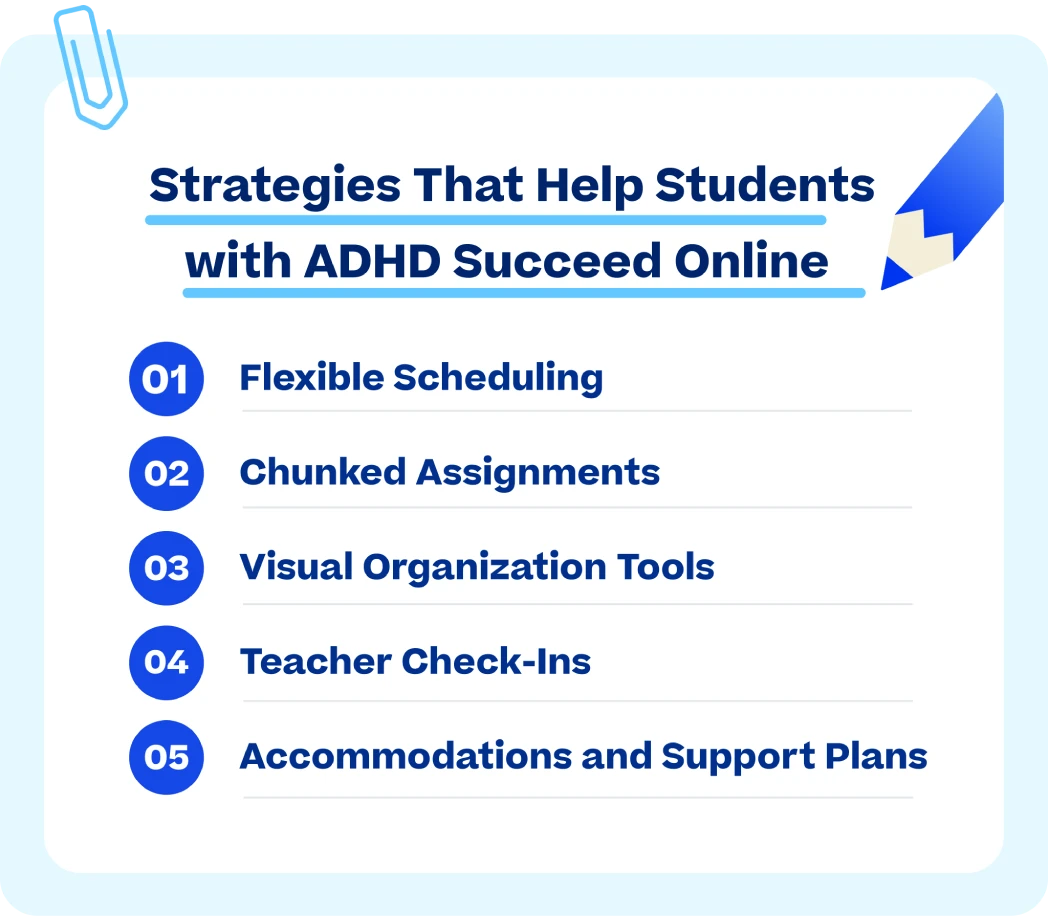
Effective ADHD learning support for children is rarely about one single accommodation. More often, success comes from combining structure, flexibility, communication, and individualized strategies. Depending on the school and the student’s needs, supports may include:
- Flexible Scheduling
Some online schools allow students to complete portions of coursework during times of day when focus is strongest. For example, a student who focuses better in the morning may tackle reading early, while another student may complete independent work after physical activity breaks. That flexibility can reduce unnecessary stress.
- Chunked Assignments
Large assignments may feel overwhelming for students with ADHD. Breaking work into smaller sections can help students begin tasks more easily, maintain momentum, feel less discouraged, and experience more frequent success.
- Visual Organization Tools
Many virtual platforms include assignment calendars, visual checklists, reminder notifications, and progress trackers. These tools can help students remember deadlines, track missing work, and feel less overwhelmed by large assignments.
- Teacher Check-Ins
Regular teacher communication can help students stay accountable while still encouraging independence. Short check-ins may help clarify:
- Missing assignments
- Pacing concerns
- Confusion about directions
- Emotional frustrations
- Accommodations and Support Plans
Some students receive formal support through IEPs, virtual 504 accommodations, and intervention plans. Depending on the student, accommodations may include:
- Extended time and flexible pacing
- Frequent movement and sensory breaks
- Alternate assignment formats
- Organizational and executive functioning support
These supports are designed to reduce barriers and help students participate more successfully in learning.
How Learning Coaches Help Students With ADHD Succeed
In many online learning programs, parents or guardians play an active support role, often called the Learning Coach. The level of involvement and time commitment for Learning Coaches varies by the student’s age, independence level, and the school’s program structure, but involvement often includes:
- Helping establish routines
- Monitoring assignments
- Communicating with teachers
- Encouraging self-advocacy
- Supporting emotional regulation
At the same time, it is important that parents do not feel pressure to become full-time teachers. One helpful approach is gradually transferring responsibility to the student over time. For example, younger students may need direct supervision. Older students may use planners independently while still benefiting from accountability check-ins.
Students with ADHD are not all alike, and successful online learning often depends on finding the right combination of flexibility, communication, structure, and support. For some students, virtual learning reduces stress and creates space for greater focus and confidence. For others, additional accommodations or routines may help make learning more manageable over time.
Learn more about flexible online learning options designed to support students with diverse learning needs.
Common Questions Parents Ask About Online School
Before enrolling, families may want to ask specific questions about ADHD online school support. Some of the most common questions include:
What accommodations are available?
Ask the online school you have in mind what supports they have for children with attention challenges. Ask what accommodations are available for focus, organization, pacing, movement breaks, assignment support, and time management skills challenges.
How much live instruction is required?
Some students with ADHD benefit from structured live instruction, while others may need flexibility and movement breaks throughout the day.
What support exists if students fall behind?
Families may want to understand how teachers track progress, provide intervention support, and communicate concerns before small struggles become larger academic challenges.
Are lessons recorded?
Replayable lessons may help some students revisit instructions, review difficult concepts, or learn at a pace that feels less overwhelming.
If you are exploring online school for students with ADHD, you might also wish to discover how online schools support students with autism, IEPs, 504 plans, and other diverse learning needs.