
 About Us
 Why K12?
 Safety Needs
 How Students Succeed
 FAQs
FAQs Online Elementary School
 Online Middle School
 Career and College Prep
 Online High School
 Student Clubs
 Career and College Services
 Inside the Online Classroom
 A Day in the Life
 Social & Extracurricular
 Advice, Tips & Inspiration
 Benefits for Life
 Enroll
 All School Options
 Need More Help?
What are school vouchers and scholarship programs for private school?
At K12, we believe that every student deserves an exceptional, accredited education, regardless of their financial circumstances. We’re dedicated to helping families choose the best education for their child, whether they’re looking to enroll full-time, part-time, or sign up for individual classes. Families can take control of their child’s learning with various options for K–12 vouchers, scholarships, and other tuition assistance programs that help offset or fully cover the cost of private online school. Available programs vary by state, and new scholarship windows open each school year.
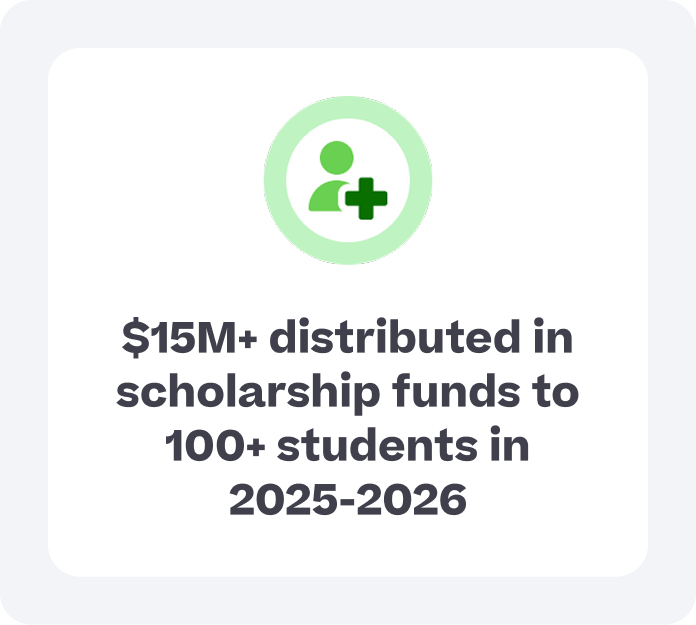
School vouchers, scholarships, and other tuition assistance programs can help offset or fully cover the cost of private online school. These programs are designed to make private education more affordable and accessible for eligible families.
Eligibility varies by state and program but may be based on:
- Household income requirements
- State residency
- Academic or educational needs
- Participation in qualifying state programs
K12-powered private schools participate in a variety of funding opportunities that can help eligible students access private education at a lower cost.
Browse available programs below.

Available State-Funded Scholarships
State-funded scholarships can help eligible families use education funding toward the private school of their choice. K12 enrollment consultants can help identify available programs and guide families through the application process.
Alabama’s CHOOSE Act makes education savings accounts (ESAs) available to eligible K-12 students, empowering parents to choose the best educational setting for their child and pay for qualified expenses through approved education service providers. Eligible students can receive up to $7,000 in annual CHOOSE Act funds, which can be used toward tuition and fees, tutoring services, and educational supplies and materials.
Alabama’s CHOOSE Act provides eligible families with:
- Scholarship dollars that can contribute to or fully cover private school tuition and fees
- The flexibility to use funds across a range of approved educational expenses, including tutoring and educational materials
- Equal opportunity for children in grades K–12 to access a personalized learning experience outside of the traditional public school setting
- An income-based eligibility threshold of up to 300% of the federal poverty level
Which K12-powered private schools participate?
Visit the school pages above to learn more about eligibility and how to apply.
Arizona’s Empowerment Scholarship Account (ESA) provides scholarship dollars to Arizona families to help them pursue flexible options for their children’s learning. Public funding through the ESA enables families to expand their educational opportunities outside the public school system and further personalize their educational experience. Arizona’s ESA provides nearly $7,000 per student, which fully covers tuition at many K12-powered private schools.1
Arizona’s ESA provides Arizona families with:
- Scholarship dollars that contribute to or even fully cover private school tuition
- Additional Scholarship dollars for students with special needs
- The ability to customize their child’s education
- Equal opportunity for children to access a personalized learning experience
- An easy application process—just two simple steps for approval
Which K12-powered private schools participate?
ESA Fully Covers Full-Time Tuition:
- Grand Canyon Private Academy
- K12 Private Academy
- The Keystone School
- Marian University Preparatory School (MU Prep)
ESA Significantly Contributes to Full-Time Tuition:
Visit the Arizona Empowerment Scholarship page to learn more about eligibility and how to apply.
Arkansas’s Education Freedom Account (EFA) program provides state funding to eligible families to help cover approved educational expenses, including private school tuition, homeschool curriculum, tutoring, educational therapies, and other qualifying services. For the 2025–2026 school year, eligible students can receive up to $6,864 in EFA funds, distributed quarterly.
Arkansas’s EFA provides eligible families with:
- Scholarship dollars that can contribute to or fully cover private school tuition and other approved educational expenses
- Additional scholarship dollars for students with special needs, including Succeed Scholarship recipients, students with disabilities under IDEA, and homeless or foster students
- Priority consideration for families in the military, law enforcement, and first responder communities, as well as students from schools rated D or F
- A simple annual renewal process for returning participants that does not require resubmitting documentation
Which K12-powered private schools participate?
- Grand Canyon Private Academy
- The George Washington University Online High School
- K12 Private Academy
- The Keystone School
- Marian University Preparatory School
Visit the school pages above to learn more about eligibility and how to apply.
Indiana’s Choice Scholarship Program provides qualifying families in Indiana with a financial voucher to offset tuition costs at a participating private school of their choice. For the 2023–2024 school year, Indiana students can receive up to $7,574.97 in Choice Scholarship funds.
Indiana’s Choice Scholarship provides eligible families with:
- Access to financial aid to help cover tuition costs
- Equal opportunity for children to access a school that will challenge, engage, and meet their needs
- A scholarship toward a superior education experience at a K12-powered private school
Which K12-powered private schools participate?
Visit the Indiana Choice Scholarship page to learn more about eligibility and how to apply.
Florida’s Personalized Education Program (PEP), funded through the Florida Tax Credit scholarship, provides Florida students not attending public or private school full-time with an education savings account to fund their education options. The program will serve 20,000 students in the 2023–2024 school year and grow by 40,000 annually.
The Florida PEP provides eligible families with:
- An education savings account that functions like a bank account
- Education funds to personalize student learning
- Priority for certain households as outlined in the income priority guidelines
Which K12-powered private schools participate?
Visit the Florida PEP page to learn more about eligibility and how to apply.
New Hampshire’s Education Freedom Account (EFA) program provides state-funded grants to eligible families to help cover the cost of their child’s education outside of the public school system. EFA funds can be used toward private school tuition, tutoring, online learning programs, educational supplies, technology, and other educational expenses, with participating students receiving an average grant of approximately $4,800.
New Hampshire’s EFA provides eligible families with:
- Scholarship dollars that can contribute to or fully cover private school tuition
- Additional scholarship dollars and priority access for students with special needs
- The flexibility to use funds across a wide range of approved educational expenses
- An equal opportunity for children to access a personalized learning experience outside of the traditional public school setting
Which K12-powered private schools participate?
- Grand Canyon Private Academy
- The George Washington University Online High School
- K12 Private Academy
- The Keystone School
- Marian University Preparatory School
Visit the school pages above to learn more about eligibility and how to apply.
Opportunity Scholarship Program
The Opportunity Scholarship is an income-based award covering partial or full tuition at non-public schools. Eligible families must meet household income requirements, and award decisions are subject to the available funds.
Education Student Accounts (ESA+) Program
The ESA+ Scholarship is for students who have a documented disability. Awards can be used to cover tuition at a non-public school and other educational expenses.
Students must be eligible for special education services, as documented by a North Carolina public school IEP eligibility determination. These can include but are not limited to autism, hearing impairment, visual impairment, orthopedic impairment, and intellectual or developmental disability.
Which K12-powered private schools participate?
Visit the Scholarship Opportunities page to learn more about eligibility and how to apply.
South Carolina’s Education Scholarship Trust Fund (ESTF) Program is administered by the South Carolina Department of Education and provides qualifying families with scholarship funds to support a customized, flexible education for their child. Eligible families can receive up to $7,634 for the 2026–2027 school year, which can be used toward tuition and fees at a participating private school, tutoring, materials and textbooks, and other approved educational expenses.
South Carolina’s ESTF Program provides eligible families with:
- Scholarship dollars that can contribute to or fully cover private school tuition and fees
- The flexibility to use funds across a range of approved educational expenses, including tutoring and materials
- Equal opportunity for children in grades K–12 to access a personalized learning experience outside of the traditional public school setting
- An income-based eligibility threshold of up to 500% of the federal poverty level, making the program accessible to a wide range of South Carolina families
Which K12-powered private schools participate?
Visit the school pages above to learn more about eligibility and how to apply.
Texas Education Freedom Account (TEFA) provides eligible Texas families with state-funded scholarships to help cover educational expenses such as private school tuition, homeschooling resources, and specialized educational services. Through the program, eligible students can receive up to $10,474, helping families expand access to personalized educational options and making private education more affordable.
Texas Education Freedom Account (TEFA) provides eligible Texas families with:
- Scholarship dollars that can contribute to or fully cover private school tuition
- Funding that can be used for a variety of approved educational expenses, including homeschooling and specialized services
- Greater flexibility to select the educational environment that best meets a child’s needs
- Increased access to personalized learning opportunities beyond the traditional public school system
- Financial support that helps make high-quality private education more attainable
Which K12-powered private schools participate?
TEFA Fully Covers Full-Time Tuition
Visit the participating school pages above to learn more about eligibility and how to apply.
West Virginia’s Hope Scholarship empowers families to make school choices that are right for their child’s educational needs, offering qualifying K–12 students an opportunity to build an individual learning experience outside of full-time public school attendance. Eligible students can receive up to $5,435.62 for the 2026–2027 school year, which can be used toward tuition, homeschool curriculum, and other qualifying expenses.
West Virginia’s Hope Scholarship provides eligible families with:
- Scholarship dollars that can contribute to or fully cover private school tuition and other approved educational expenses
- The flexibility to use funds toward a wide range of qualifying expenses, including homeschool curriculum and educational materials
- Universal eligibility beginning in the 2026–2027 school year, extending to all K–12 students eligible to enroll in a West Virginia public school — including existing private school and homeschool students
- An equal opportunity for children to access a personalized learning experience tailored to their individual needs
Which K12-powered private schools participate?
Visit the school pages above to learn more about eligibility and how to apply.
Frequently Asked Questions
Some K12-powered private schools are available at no cost through state education scholarship programs (such as Arizona’s Empowerment Scholarship) — eligibility depends on your state, so check K12.com to see what’s available where you live.
An ESA is a state-funded account that gives families a portion of their child’s public education funding to use for approved educational expenses, including tuition at K12-powered private schools.
Several states, including Arizona and Arkansas, offer education scholarship programs that can be applied to K12-powered private school tuition — visit the private school page on K12.com to see current options by state.
1Arizona’s ESA provides nearly $7,000 per student. This amount covers GCPA’s tuition costs. There may be additional costs associated with special education services, which could vary based upon the level of services needed to properly support a student’s IEP/ISP/MET/504 plan. ESA amounts for students with special needs are determined by disability category.