
 About Us
 Why K12?
 Safety Needs
 How Students Succeed
 FAQs
FAQs Online Elementary School
 Online Middle School
 Career and College Prep
 Online High School
 Student Clubs
 Career and College Services
 Inside the Online Classroom
 A Day in the Life
 Social & Extracurricular
 Advice, Tips & Inspiration
 Benefits for Life
 Enroll
 All School Options
 Need More Help?
How to Start at an Accredited Online School: A Complete Guide
Learn how to start at a K12-powered accredited online school — verify accreditation, choose the right program, gather documents & enroll with confidence.
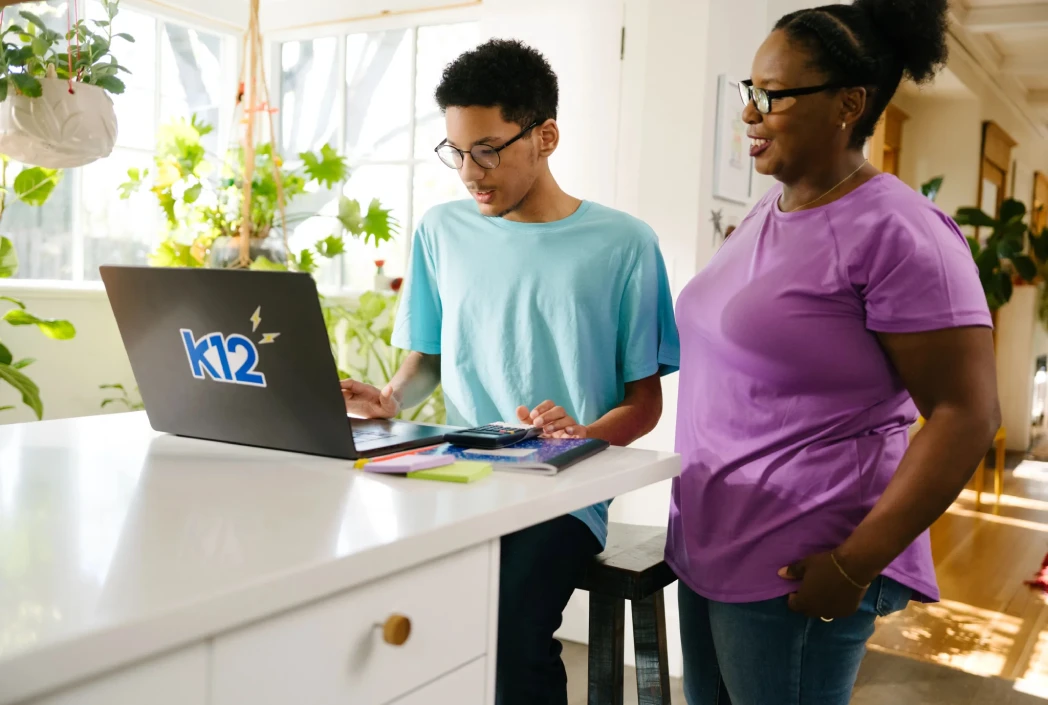
Table of Contents
Starting at an accredited online school involves selecting a vetted institution, verifying its accreditation status, gathering required documents, submitting an application, and preparing your home learning environment. Most families move from initial research to their child’s first day of class within two to four weeks.
What is accreditation?
Accreditation is an independent review process in which outside agencies evaluate a school against established academic standards — examining its curriculum, teacher qualifications, and student support services to confirm the education is consistent and reliable, not just self-described that way. It matters because it directly affects your child’s future: accredited coursework, transcripts, and diplomas are accepted without question by colleges, universities, and employers, and accreditation status can influence credit transfers, financial aid, and scholarship eligibility.
Your Guide to Starting at an Accredited Online School
Choosing to enroll in an accredited online school is a meaningful decision for your family — one that offers more control over your child’s schedule, pace, and learning environment than a traditional classroom. This guide walks through every stage of that process, from understanding accreditation to getting ready for the first day.
How to Choose the Right Accredited Online K–12 School
Once you’ve confirmed a school is accredited, the real decision comes down to fit. Here’s what to weigh:
- Start with your child’s learning style. Some students do best with self-paced coursework they can move through independently; others need the structure of live classes and a set daily schedule to stay on track. Look for a program that matches how your child actually learns, not just what’s available.
- Compare curriculum depth and options. A strong program offers core subjects alongside electives, enrichment courses, and — for high schoolers — Advanced Placement® or honors-level options if college admission is a goal. Ask to see a sample curriculum or course catalog before deciding.
- Check teacher qualifications and involvement. Certified, subject-credentialed teachers who are genuinely accessible for questions and feedback make a measurable difference in how supported students feel.
- Evaluate support services. Tutoring, academic advising, counseling, and technical support all matter, but they matter most for students with specific needs — ask directly how the school supports students with IEPs, 504 plans, or those who are behind or ahead academically.
- Consider the schedule and format fit for your family. Some programs run on a traditional school-day schedule with required attendance windows; others offer more flexibility for families juggling work, activities, or other commitments. Be honest about how much day-to-day supervision you can realistically provide, especially for younger students.
- Weigh cost and flexibility. Tuition, full-time vs. part-time options, and overall affordability vary meaningfully between programs — compare these alongside academics, not as an afterthought.
- Request a platform demo. Before starting, ask to see the learning management system in action — how students access assignments, submit work, and communicate with teachers. It should be reliable and easy to navigate on your home devices, since a clunky platform can undercut an otherwise strong curriculum.
- Talk to current families if possible. Reviews and testimonials are useful, but a conversation with a current parent or student gives a clearer sense of what day-to-day life at the school is actually like.
Step-by-Step: How to Start at an Accredited Online School
- Verify accreditation. Confirm the school holds regional accreditation from a body recognized by the U.S. Department of Education. This protects your child’s ability to transfer credits, apply to college, and have their diploma recognized down the road.
- Talk it through as a family. Online school is a shared commitment. Your child needs to be ready to take more ownership of their learning, and a parent or guardian needs to be ready to serve as a Learning Coach, supporting the routine and staying involved day-to-day.
- Choose the right program based on the factors above — curriculum, teacher quality, support services, schedule, and cost.
- Gather your documents. Request transcripts or records from your child’s current school, and collect proof of age, proof of residency, and immunization records ahead of time to avoid delays.
- Submit your application. Create an account on the school’s enrollment portal, complete the required information, and upload your documents. Most applications take one to three days once your paperwork is ready.
- Prepare your learning space and schedule. Set up a quiet, dedicated area for schoolwork and build a daily routine around your child’s class schedule and check-in times.
- Complete onboarding. Once accepted, your child will complete an orientation to learn the digital learning platform, set up school email and login credentials, and connect with teachers before their first day.
Documents You’ll Need to Register
Gathering these ahead of time keeps the process moving:
- Proof of age: A certified birth certificate, passport, or official immigration record
- Proof of residency: Two recent documents showing your current address, such as a utility bill or lease agreement
- Immunization records: Up to date per your state’s requirements, showing dates of each dose
- Academic records: Recent report cards for younger students, full transcripts for high schoolers
- Special education documentation: A current IEP or 504 plan, if applicable
If you’re missing a document, most vital records offices and school registrars can issue certified copies or transcripts within a few business days — it’s worth requesting these as soon as you decide to enroll, since some schools take longer than others to process requests.
Ready to enroll in an accredited online school?
Enrolling at an accredited online school comes down to a handful of clear steps: understanding accreditation, choosing the right program, gathering documents, applying, and preparing your home environment. Most families find that once they’ve verified a school’s legitimacy and gathered their paperwork, the rest of the process moves quickly — and the flexibility that follows is often worth the upfront preparation.
K12-powered schools are Cognia-accredited — use K12’s School Finder to discover an accredited school near you.
Accredited Online School FAQs
How do I know if an online school is accredited?
Check the school’s website for its accreditation status, then verify it independently on the accrediting agency’s website or the U.S. Department of Education’s database of accredited institutions. Regional accreditation from a recognized body, such as Cognia, is the standard to look for.
Is online school legitimate?
Yes. An accredited online school provides an education that meets the same recognized standards as a traditional school, and its credits and diplomas are accepted by colleges, universities, and employers.
How many hours a day do students spend on coursework?
This varies by grade level and program pace, but most students spend roughly 3 to 6 hours a day on coursework, with flexible scheduling that allows families to adjust around their routine.
Do colleges accept students from online schools?
Yes. Graduates of accredited online schools are regularly admitted to colleges and universities, since their accreditation confirms the education meets standard admissions criteria.
How is online school different from homeschooling?
Online school involves structured, teacher-led instruction with certified educators and a set curriculum. Homeschooling is typically parent-directed and more customizable, which appeals to families wanting a more individualized approach.
Is online school affordable?
Private online schools are often more affordable than traditional private schools, making them a cost-effective option for families seeking an accredited education outside the public system.