 About Us
 Why K12?
 Safety Needs
 How Students Succeed
 FAQs
FAQs Online Elementary School
 Online Middle School
 Career and College Prep
 Online High School
 Student Clubs
 Career and College Services
 Inside the Online Classroom
 A Day in the Life
 Social & Extracurricular
 Advice, Tips & Inspiration
 Benefits for Life
 Enroll
 All School Options
 Need More Help?
A Parent’s Role in Online School: How to Stay Involved Without Micromanaging
Learn about parent involvement in online school and how to support your child without micromanaging. Discover practical strategies that build independence.

Table of Contents
Parents can stay involved in their child’s online education without taking over by setting clear routines, checking in at key points during the day, asking questions instead of giving answers, and encouraging independence. The goal is to support learning without micromanaging it, helping students build confidence and problem-solving skills over time.
In online school, parents play a more visible role in the learning process than in traditional school settings, but that doesn’t mean managing every assignment. These strategies help parents stay involved while allowing students to take ownership of their learning.
Why Parent Involvement Matters in Online School

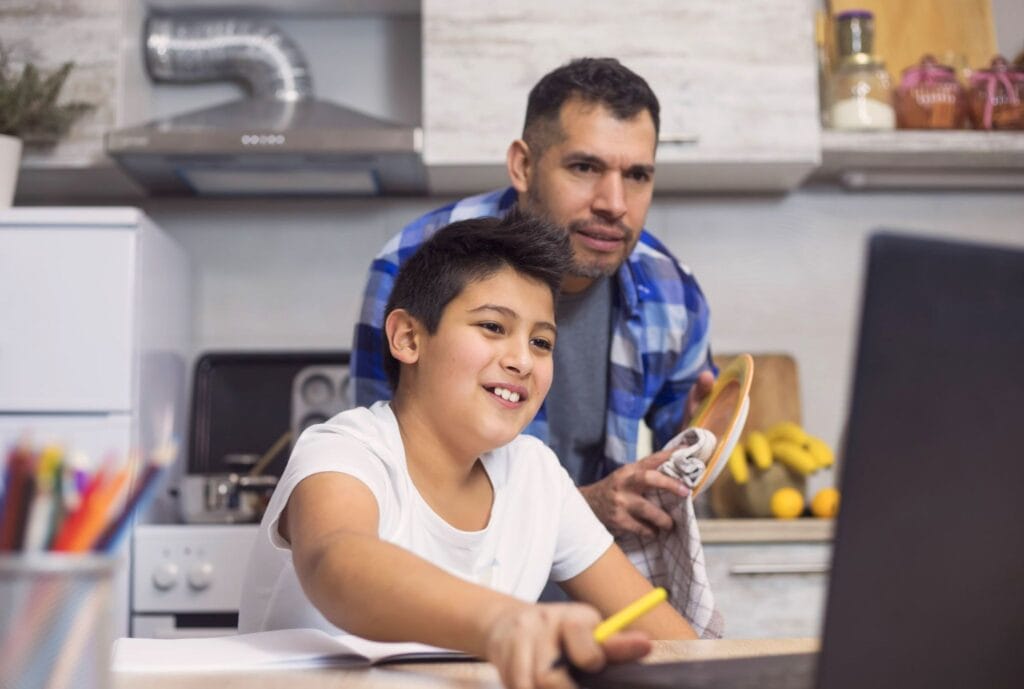
Parents play a more active role in online learning because they have greater visibility into their child’s daily academic experience. In many online programs, parents take on the role of the Learning Coach (LC), helping guide routines, monitor progress, and support learning without taking over.
In an online setting, parents can often see assignments, grades, and lesson activity in real time, making it easier to notice when a student needs support. Research shows that family involvement is one of the strongest predictors of student success, highlighting how important this role can be.
However, more visibility can also lead to over-involvement if parents feel the need to monitor every step. While support is important, students also need opportunities to think independently, make decisions, and learn from challenges.
The most effective approach is to stay involved while encouraging independence, using intentional strategies that support learning without micromanaging.
How Parent Involvement Changes by Grade Level
How much time parents spend supporting their child depends on age and grade level. Younger students require more direct support, while older students gradually take more responsibility for their learning.
Elementary School (Grades K–5): More Hands-On Support
Parents of younger students typically play a more hands-on role in online learning. At this stage, children are still developing basic study habits and need help staying organized and focused.
To support learning without micromanaging:
- Help establish a consistent daily routine
- Check in at set times
- Encourage your child to attempt tasks before you step in
The goal is to provide structure while gradually encouraging independence. This doesn’t mean parents are teaching. Online schools have dedicated teachers to cover all subjects. Think of yourself as a guide who helps keep the day organized and moving forward.
As children progress through elementary grades, they gradually need less direct support. A 5th grader, for example, might work more independently than a 1st grader, but would still benefit from supervision and encouragement.
Middle School (Grades 6–8): Transitioning to Independence
Middle school is when students begin to take more ownership of their learning, but still benefit from guidance. Your role often shifts at this stage from sitting closely to your child to checking in periodically throughout the day.
Parents can support this transition by:
- Reducing direct oversight and increasing check-ins
- Encouraging problem-solving before offering help
- Helping students reflect on their progress
At this academic stage, the focus shifts from managing tasks to coaching decision-making. Students begin managing their own schedules while parents provide structure and accountability when needed.
High School (Grades 9–12): Gradually Stepping Back
High school students should manage most of their learning independently while parents shift to more of an advisor role. Consider spending around an hour each day reviewing progress, discussing goals, or helping your child plan their work but gradually start to step back from managing daily lessons.
Parents of online high school students can stay involved by:
- Monitoring overall progress rather than daily tasks
- Stepping in only when patterns of struggle appear
- Encouraging communication with teachers
At this academic stage, students learn to monitor grades, communicate with teachers, and manage schedules on their own. This independence prepares them for college, careers, and other responsibilities after graduation.
Understanding how online curriculum progresses by grade level can also help you adjust your level of support as your child grows.
Practical Strategies for Supporting Without Micromanaging

Parents can support their child’s academic success without micromanaging by using simple, consistent strategies that encourage independence while maintaining accountability. These approaches help students stay on track while developing confidence in their own abilities.
Create Predictable Check-In Routines
Instead of monitoring your child constantly, set specific times during the day to check in on their progress. This helps create structure while giving your child space to work independently.
For example:
- Review progress in the morning
- Check assignments after lunch
- Go over completed work at the end of the day
This approach keeps you involved without interrupting your child’s focus or independence.
Ask Questions Instead of Giving Answers
When your child gets stuck, it can be tempting to step in and solve the problem. Instead, guide them by asking questions that encourage critical thinking and problem-solving.
Try asking:
- “What have you tried so far?”
- “Where could you find help for this?”
- “What do you think might work next?”
This approach helps your child build confidence and learn how to approach challenges on their own.
Monitor Progress (Just Not Every Minute)
Parents don’t need to sit through every lesson or assignment. Instead, focus on reviewing overall priogress at regular intervals.
Check:
- Completed assignments
- Grades and feedback
- Overall performance
Looking at patterns over time helps you identify when support is truly needed without overreacting to small issues. Consistent study support at home can make it easier to track progress without needing to monitor every detail.
Encourage Effort and Independence
Recognizing effort is just as important as recognizing results. When students solve problems independently or take initiative, acknowledging that effort reinforces positive habits.
Simple encouragement like:
- “You handled that really well.”
- “I noticed you figured that out yourself.”
Helps build confidence and motivates students to continue working independently.
Set Clear Expectations Upfront
Parents can support this by:
- Setting clear daily or weekly goals
- Defining when help is available
- Encouraging responsibility for completing tasks
Clear expectations reduce the need for constant reminders and help students take ownership of their work.
Common Challenges Parents Face (And How to Handle Them)
Even with strong routines in place, many parents find it difficult to stay involved without becoming overly hands-on. Understanding common challenges can help you respond in a way that supports your child’s independence rather than limiting it.
Challenge 1: Feeling the Need to Constantly Monitor
Parents often feel the need to monitor every assignment or lesson to make sure their child is staying on track. While this comes from a place of support, constant oversight can make students dependent on external guidance.
How to handle it:
- Shift from continuous monitoring to scheduled check-ins
- Focus on overall progress instead of individual tasks
- Give your child time to attempt work independently before stepping in
This approach helps maintain accountability while allowing students to develop independence.
Challenge 2: Stepping in Too Quickly When a Child Struggles
When students struggle, it’s natural to want to help immediately. However, solving problems for them can prevent children from building confidence and problem-solving skills.
How to handle it:
- Pause before stepping in
- Ask guiding questions instead of giving answers
- Encourage your child to use available resources first
Supporting the process—not just the outcome—helps students learn how to navigate challenges on their own.
Challenge 3: Balancing Support with Independence
Many parents aren’t sure how much help is “too much.” Without clear boundaries, it’s easy to shift from support to micromanagement.
How to handle it:
- Set clear expectations for when help is available
- Encourage your child to take responsibility for their schedule
- Reinforce independence through positive feedback
Challenge 4: Managing Frustration (for both parent and student)
Online learning can be frustrating for both students and parents, especially when expectations aren’t clear.
How to handle it:
- Keep communication open and calm
- Focus on progress rather than perfection
- Take breaks when needed
A supportive environment helps reduce stress and keeps learning productive.
Knowing When to Step In (And When to Step Back)
One of the most important parts of supporting your child’s online education is knowing when to step in and when to step back. While it’s natural to want to stay closely involved, giving students space to take ownership of their learning is essential for building independence and confidence.
When to Step In
Parents should step in when a student needs support that they can’t yet provide for themselves.
Step in when:
- Your child is consistently missing assignments
- They seem frustrated or overwhelmed
- They are unsure how to get help or use available resources
- There is a pattern of declining performance
In these moments, your role is to guide your child to get back on track while still encouraging independence.
When to Step Back
Equally important is knowing when to give your child space to manage their own learning.
Step back when:
- Your child is making progress, even if it’s not perfect
- They are attempting to solve problems independently
- They are using available tools or asking for help appropriately
- They are developing their own successful routines
Allowing students to work through challenges helps them build resilience and confidence over time.
As students grow, the balance between support and independence naturally shifts. What starts as hands-on guidance gradually becomes a more supportive, behind-the-scenes role. By adjusting your level of involvement over time, you help your child develop the skills they need to succeed both in school and beyond.
Keep Supporting Your Child with the Right Tools and Resources
Supporting your child’s learning doesn’t require constant supervision. It requires the right approach, consistency, and access to helpful tools. As your child builds independence, having clear strategies and resources can make it easier to stay involved without taking over.
Start with a practical checklist for supporting learning at home to create structure and consistency in your daily routine.