
 About Us
 Why K12?
 Safety Needs
 How Students Succeed
 FAQs
FAQs Online Elementary School
 Online Middle School
 Career and College Prep
 Online High School
 Student Clubs
 Career and College Services
 Inside the Online Classroom
 A Day in the Life
 Social & Extracurricular
 Advice, Tips & Inspiration
 Benefits for Life
 Enroll
 All School Options
 Need More Help?
Meet Willa, Jaala, Tre, and Jordin
This military family needs educational consistency and a safe learning environment—no matter where they are. Online school’s built-in flexibility lets them focus on academics and enjoy just being kids.

Why This Family Chose K12
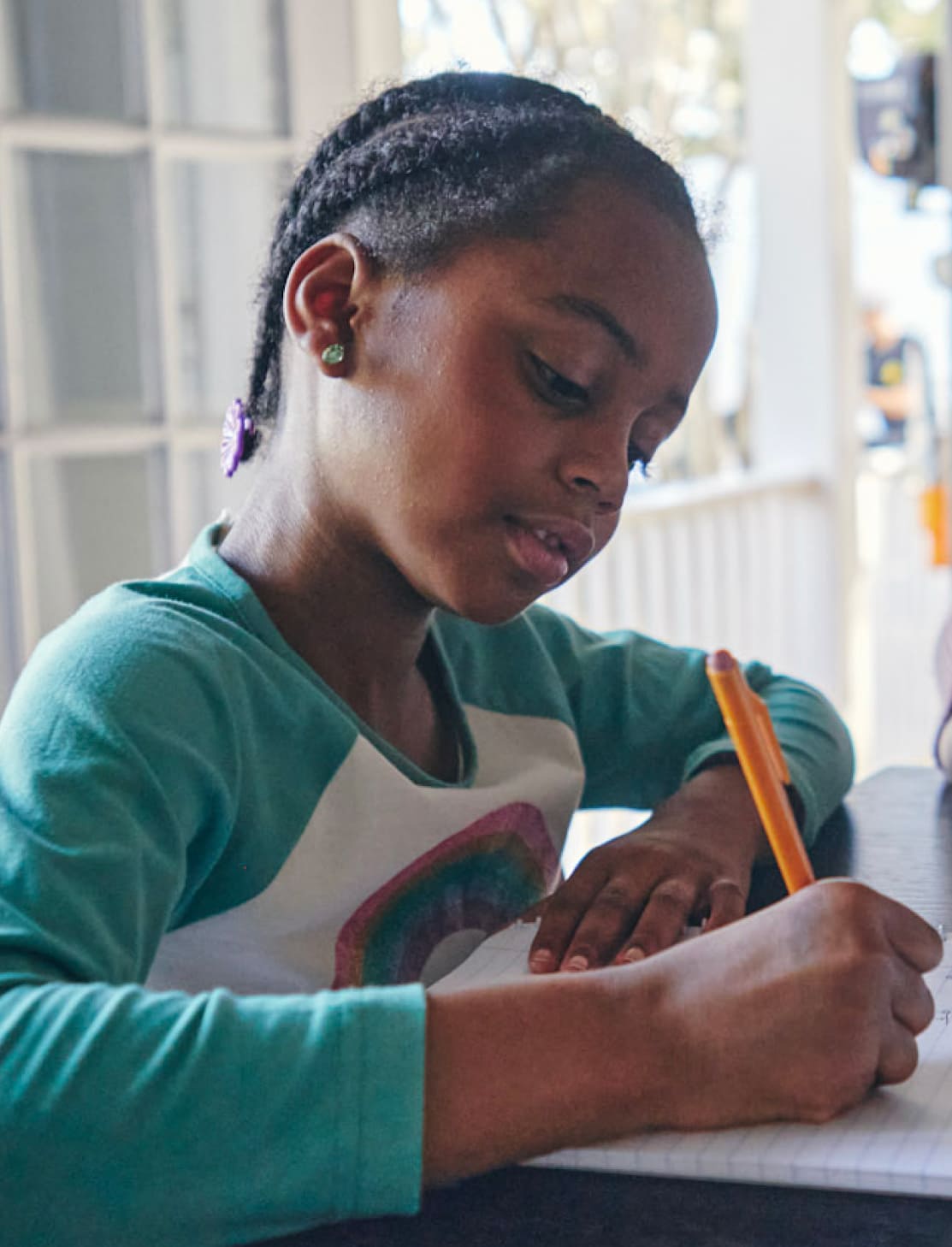
Along with providing a consistent education experience for their military family, Donesha and Willie wanted their kids to benefit from a safe, dependable school environment with far fewer instructional roadblocks.

Safety at the forefront
The kids experienced bullying in traditional school. Now they’re able to express themselves in a safe space where they can relax and focus on learning.

Prioritize health and wellness
Jaala has severe allergies. A learning environment that supports her medical needs was a relief.

Prepare for the future
Jordin and Tre, two teenage honors students, now have more time to explore their academic and extracurricular interests alongside top-notch Career and College Prep.
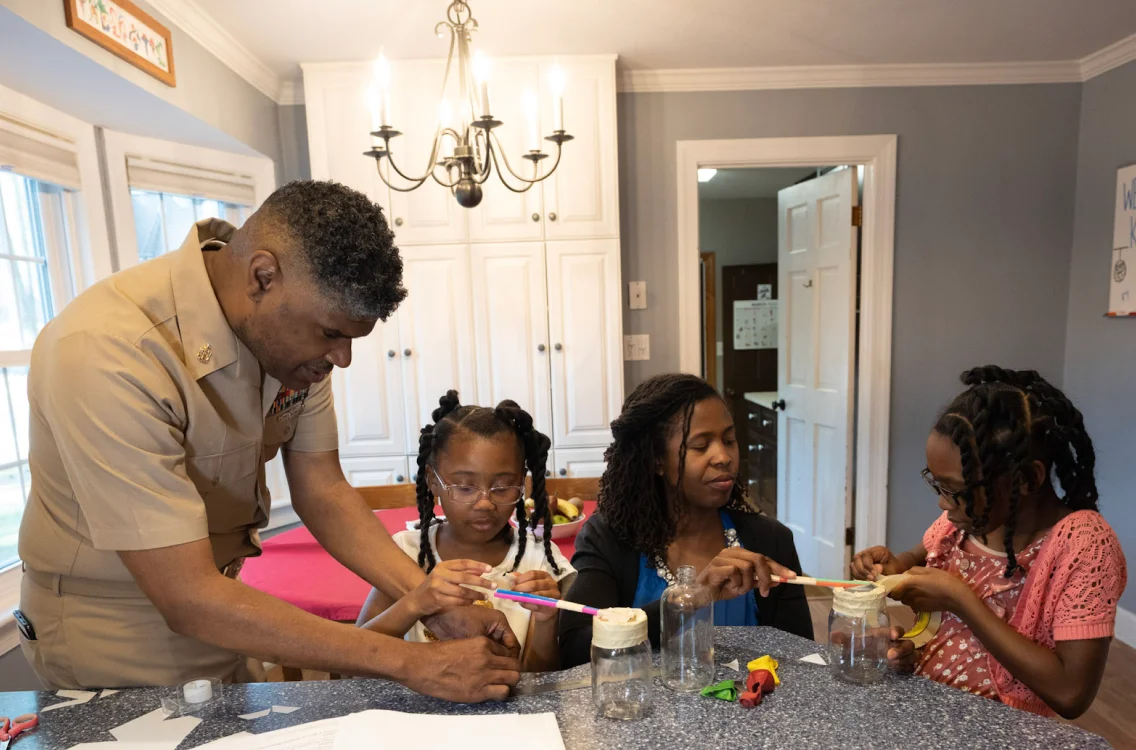
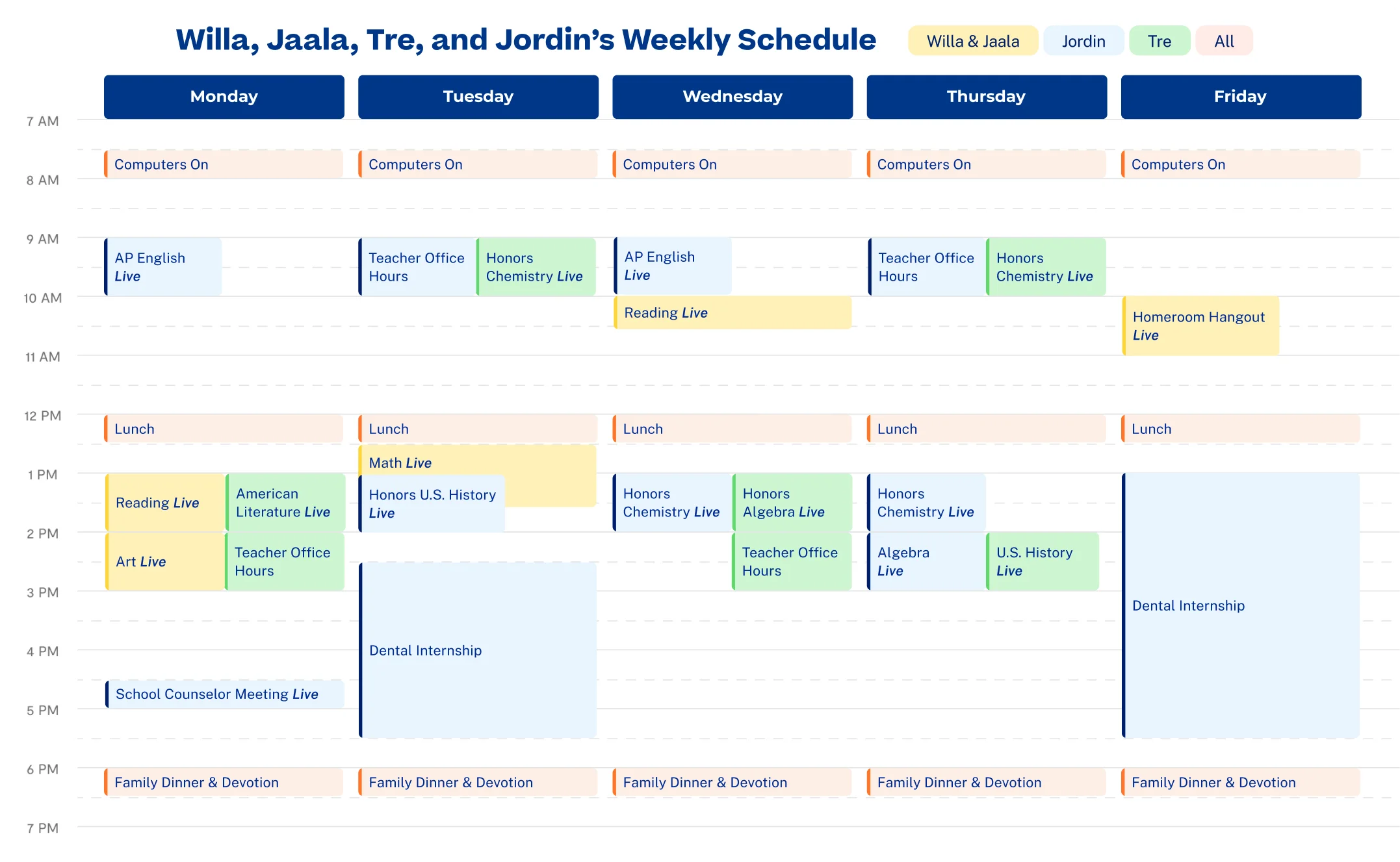
Flexible Schedule With Live Class Anchors
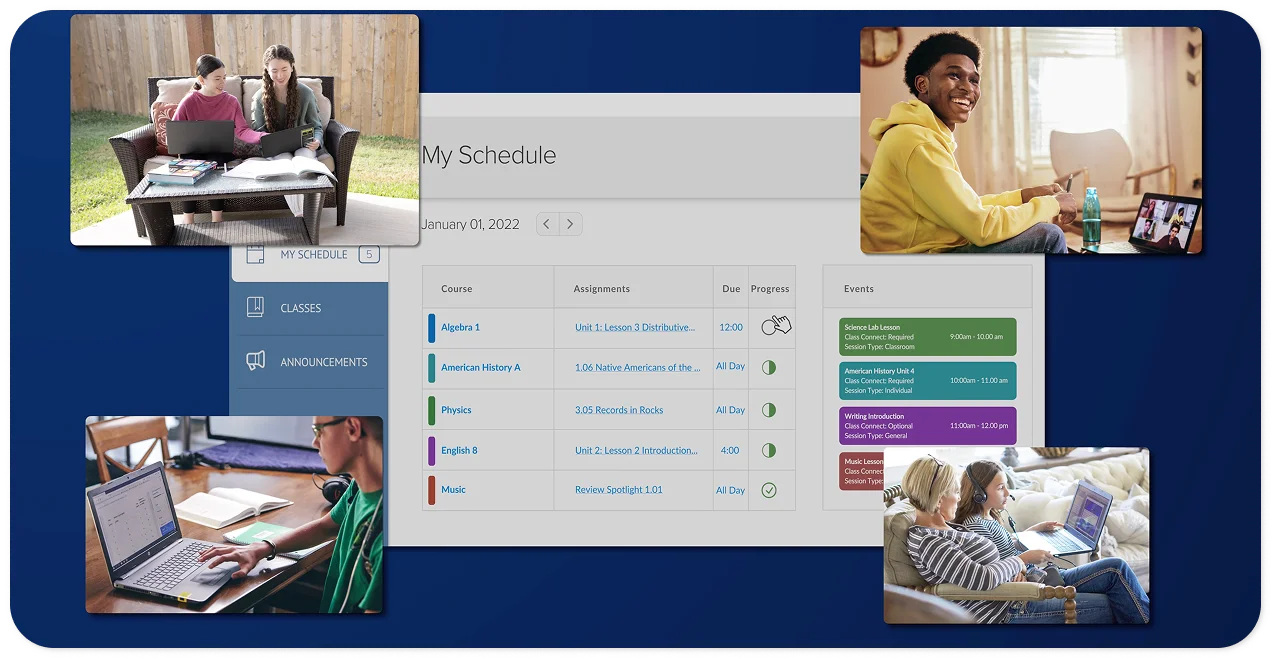
Schoolwork for this family is a mix of scheduled, live online classes, and self-guided assignments they can complete at their own pace. As high schoolers, Tre and Jordan also have time for advanced courses, internships, and dual credit college courses.
A benefit of schools powered by K12 is that the required educational materials are provided, such as a computer, textbooks, supplies for offline activities, and more!
Curriculum
The number of classes students take varies per grade level and individual. For example, elementary students like Willa and Jaala typically take 4–6 subjects each semester, with maybe 2–4 of those requiring scheduled, live classes. High school students like Tre and Jordin, typically take 3–6 subjects each semester, with 2–3 scheduled, live classes.
In addition to core academic subjects, there’s a great selection of career and college prep options like the dual credit courses Jordin and Tre take at the local college.
The Parent Experience as a Learning Coach

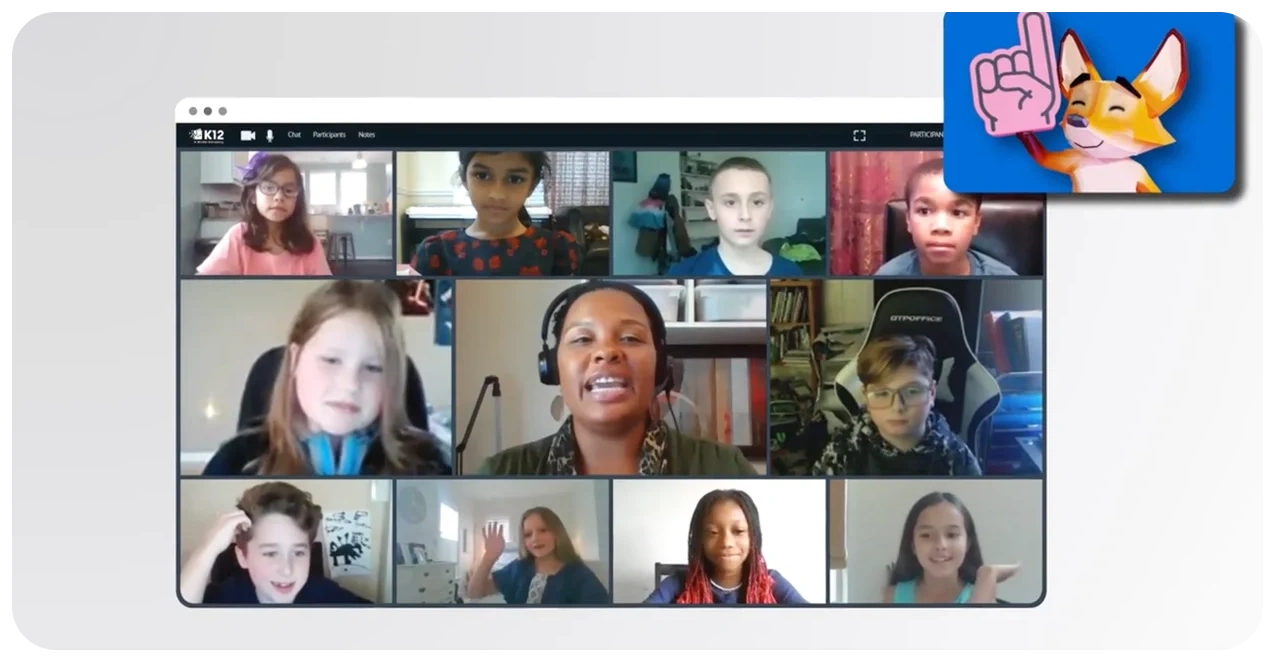
At K12-powered schools, parents (or other responsible adults) act as Learning Coaches for their students. Learning Coaches typically spend between 4–6 hours each day for elementary school students, and 1–3 hours per day for high school students. Donesha leans on support from the K12 community to help guide student success while she works alongside her four kids at home.
Preparing for the Future

Tre and Jordin are getting ready for their futures with K12. Tre is passionate about automotive studies and wants to be a pilot, while Jordin has her sights set on orthodontics.
Thanks to the built-in flexibility of online school, Jordin can do her internship at more prime times during the day to experience even more of what goes on at a dentist office. She and her brother are also taking summer courses at the local community college to get ahead.
Teacher Support and Communication
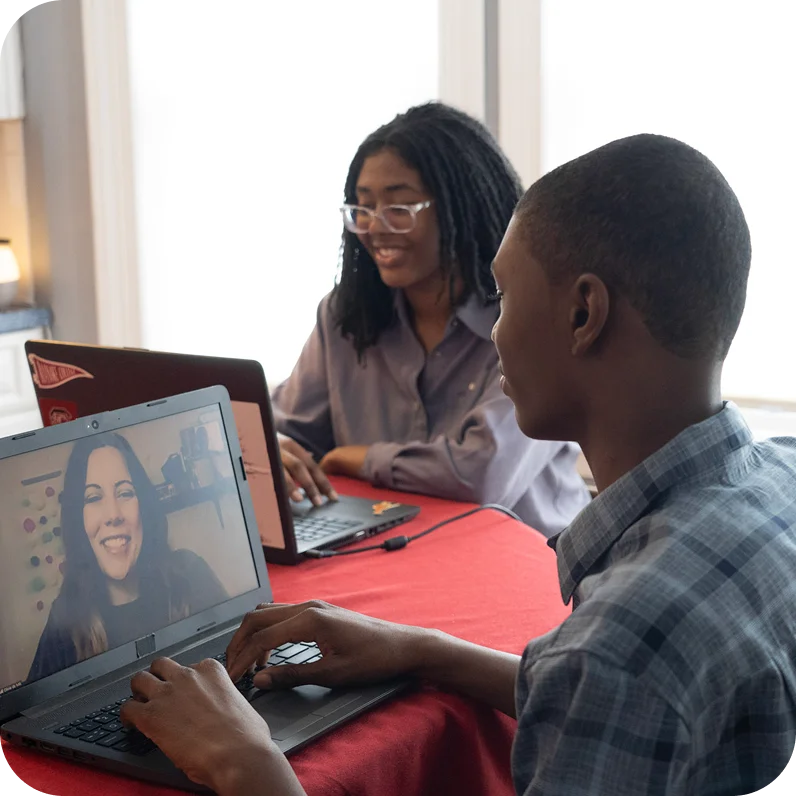
K12 teachers are not only rooting for their students to succeed, but the whole family. Donesha enjoys the relationships she and her children are building with the teachers at their K12-powered school. The teachers are understanding, patient, and supportive. Jaala connected with one teacher over their shared allergies and you can tell Tre’s and Jordin’s teachers really listen and encourage them. You can tell the students are simply enjoying learning.
Time away from the computer looks like …



Family Q&A
Donesha: We were having issues with our children being bullied. They didn’t feel safe in school and were upset and stressed. We wanted better. Our family also deals with severe allergies, so we sought an alternative that would better meet those needs. And as a military family, we wanted more consistency.
Willie: I’m in the U.S. Navy, so our family moves a lot. That comes with challenges for kids, like their schools, teachers, and friends always changing. Online school brings fewer interruptions to my kids’ education, and gives us more flexibility in where we live. With K12, we have quality education wherever we go.
Donesha: Online school gave us our power back—power over our time and schedules. If we have medical appointments or need to travel, we pack the computers and take school with us. Since classes are recorded, we can talk to the teachers and catch up later. And we love how great it has been for our teens. They can dive into their interests with the time they’ve gotten back, and better prepare for their futures.
Willie: We’re able to work in our culture and our faith—that’s very important to us. Overall, the kids seem more relaxed, too. They each have their own personalities, and with online school they get to explore and express themselves.
Jordin: I like the flexibility. Compared with traditional school, I now have more freedom to pursue my passions, like my dental internship. I can choose prime hours and experience more of what’s happening at the dental office. And with my job, I can pick up shifts that I wouldn’t be able to work otherwise.
Tre: I feel very comfortable in online school. I can work more at my own pace, and if I’m struggling with something, I can calm down and take my time—I don’t have to stop when a bell rings.
Donesha: I enjoy having my kids at home and being more involved with their education. It’s fun to provide supplemental information and real-world examples for their learning. I remember for one of Tre and Jordin’s economics lessons, we talked through how credit cards work. It’s a pretty smooth process for me—I work part time from home and can be flexible when the kids have questions or need help.
Willie: My wife does a great job as the Learning Coach. I’m glad I can be there to help by offering more examples and that sort of thing, but she definitely does the heavy lifting.
Jordin: As my Learning Coach, Mom helps plan my day to make sure I’m efficient and organized. Tre and I are pretty good friends, and I enjoy getting to spend more time with him. We have some of the same classes, so we can talk about schoolwork, or on a break we can just hang out and listen to music or watch a movie.
Jordin: When we moved to California from Japan, we had to get used to the online learning system, but it was pretty smooth. Then the transition was easy when we moved to Virginia. K12-powered schools have been very welcoming.
Donesha: Transitioning between K12-powered schools in different states has been seamless. It felt like we were in the same school. It also helps that the schools are familiar with military families. The principals and teachers have made us feel welcome, and we’ve been able to connect with other military families.
Tre: When we lived in Japan, I loved exploring the country and its food and traditions. The transition to California was a lot to adjust to—the cultural part more so than the school part. It was nice coming to a school that had other military families. They understood what we were going through.
Donesha: All the kids are artistic, so they’ll draw or do their own craft projects. Tre is an amazing musician, so you’ll find him playing. We all love listening to him. The younger girls like to take dance breaks, while the older kids enjoy reading or going on drives together. And of course, there’s giant chess.
Tre: With online school, I can play music in the middle of the day. My main instruments are piano, trumpet, ukulele, and bass guitar. I can play by myself on breaks between classes or play with Dad when he’s around. My grandfather was the real musician. We keep a picture of him on the piano.
Donesha: K12-powered schools offer a range of activities for students and families. We’ve met lots of new people on school-hosted outings at local museums or the zoo. Jordin’s in math club, and Tre’s in chess club, which is part of esports.
Donesha: The biggest surprise has been how focused my kids are in online school. Tre is much more participatory and intentional with his schoolwork. And Jordin’s in the National Honor Society and pursuing her dentistry dreams with her internship.
Donesha: I didn’t have to worry about piecing together a curriculum myself. K12 provided that for us with personalized options, and that made me much more comfortable. They also provided all the materials, even the computers.
Other Stories You Might Find Helpful
3rd Grade
Gabbie
Gabbie can work through lessons at her own energetic, fast pace and spend more time on her advanced writing assignments.

9th Grade
Arianna
Arianna’s school schedule lets her work at her own pace while taking entrepreneurship courses to help run her bakery business.

10th Grade
Stephen
Stephen’s flexible private school schedule allows room for competitive swimming while rigorous courses prepare him for college.

Learning With K12
From kindergarten to high school, K12 provides tuition-free online education that empowers students to learn in ways that work for them. Browse options in your state to find the perfect fit for your family.
These are the stories of real students attending K12-powered schools and their families. Content is a combination of direct quotes and summaries from interviews. Their stories each reflect their experiences at their respective schools. Actual experiences can vary by student and school. These pages are designed to reflect a typical day in the life of a student attending an online K12-powered school. Individual class schedules and requirements will vary by state, school, and the individual needs of each student. Course materials vary, and certain schools may not provide computers or may have specific requirements for providing equipment.