 About Us
 Why K12?
 Safety Needs
 How Students Succeed
 FAQs
FAQs Online Elementary School
 Online Middle School
 Career and College Prep
 Online High School
 Student Clubs
 Career and College Services
 Inside the Online Classroom
 A Day in the Life
 Social & Extracurricular
 Advice, Tips & Inspiration
 Benefits for Life
 Enroll
 All School Options
 Need More Help?
Why Creativity Matters in Education (and How to Unlock Yours)
Discover why creativity is a vital skill for students and how to help your child unlock their creative potential. Learn simple ways to build creativity, confidence, and self-expression.
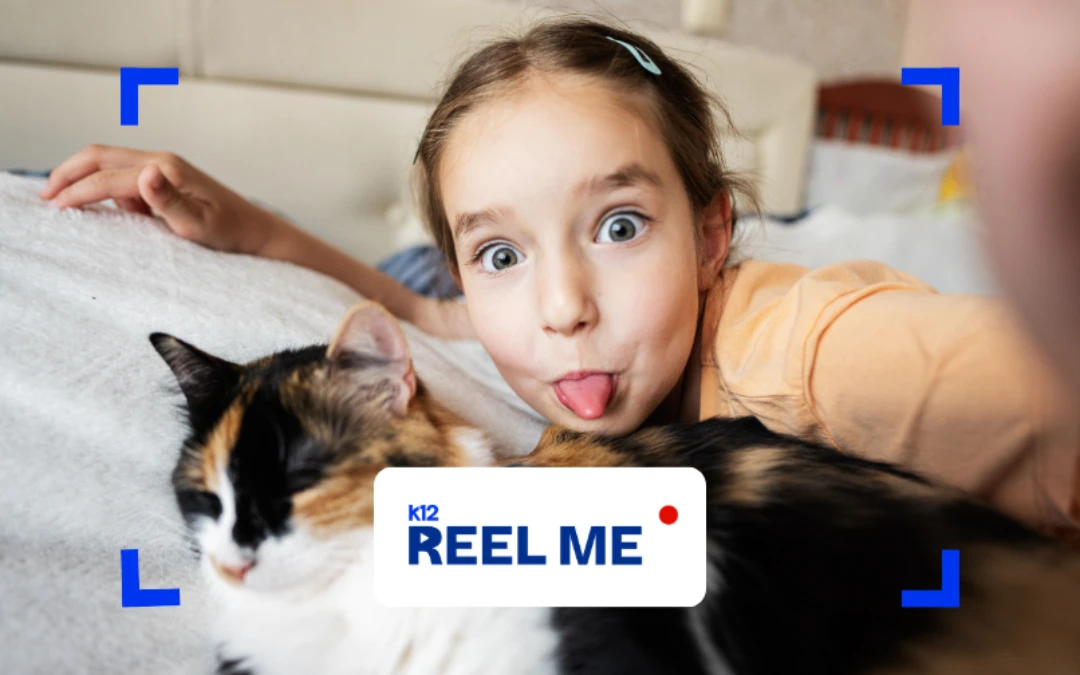
Table of Contents
When people hear the word creativity, they often picture paintbrushes, music, or theater. But it is much more than that, and it’s not just for a select few.
It shows up in everyday moments — figuring out a new way to solve a problem, asking a question no one else thought to ask, or explaining an idea in a way that finally makes it click.
In today’s educational environment, creativity isn’t just a “nice to have.” It’s essential. It helps your child think independently, stay engaged, and approach challenges with confidence. And here’s the most important part: creativity isn’t a talent reserved for certain students. It’s a way of thinking that can be developed.
Creativity Is More Than Art
One of the biggest misconceptions about creativity is that it belongs only to artists.
In reality, creativity shows up in small, meaningful ways every day. Your child might use it to approach a tricky math problem differently, make connections in a reading assignment, or come up with their own way to organize a project.
When we stop treating creativity as a special talent and start seeing it as a way of thinking, things shift. More students feel included. More ideas come forward. And learning becomes more engaging and personal.
Why Creativity Matters in Education
Creativity helps students move beyond memorizing information and start understanding it.
When your child thinks creatively, they’re not just looking for the “right” answer. They’re exploring ideas, testing possibilities, and figuring things out as they go. That kind of thinking builds confidence in a meaningful way.
Not the kind of confidence that comes from always being correct but the kind that comes from trying, adjusting, and improving.
It also makes learning feel more relevant. When students can connect what they’re learning to their own experiences, they’re more engaged and more willing to keep going.
Creativity Builds Real-World Skills
The skills your child builds through creativity don’t stay in the classroom.
Creative thinkers tend to be more flexible when things change. They’re more comfortable taking on new challenges and are more willing to explore different solutions. They also learn to communicate their ideas clearly and in meaningful ways.
And this isn’t limited to certain subjects. Creativity shows up when a student designs a science experiment, shapes an argument in writing, or creates a presentation that tells a story instead of just listing facts.
These are the same skills they’ll use in college, careers, and everyday life.
Everyone Is Creative (Yes, Really)
It’s easy to think of creativity as something you’re either born with or not. But that’s not the case. Creativity is a mindset.
Some students have simply had more opportunities to practice it or more encouragement along the way. That can make it seem as if creativity comes naturally to some and not to others. But in reality, creativity is something every child can develop.
You’ll see it in everyday moments — when your child asks a question no one else thought to ask, tries a different approach, or shares an idea in their own way, even if it’s still coming together. Sometimes it even shows up as humor — a clever joke, a funny observation, or a unique viewpoint.
Those moments matter. They’re how creativity grows.
And once you start noticing them, the next step is simple: keep encouraging them.
How to Unlock Creativity
So, what does this look like in everyday learning?
It often starts with interest. When your child explores something they care about, ideas tend to come more naturally. That curiosity becomes the starting point for creative thinking.
From there, it helps to give them different ways to express those ideas. Not everything has to be written. Sometimes a quick video, a drawing, or a conversation can help a student think more deeply than a traditional response.
Just as important is giving them space to try. Because creativity rarely shows up fully formed. It’s usually a rough first attempt, followed by a better second one. Then another.
That’s not failure — that’s the process. Over time, those small attempts build confidence. And once that confidence grows, creativity has room to take off.
Using Creativity to Share Your Story
At its core, creativity is about communication.
It’s how your child shares what matters to them, their ideas, experiences, and motivations. And when students start telling their own stories, something shifts.
They begin to see that their voice is valued.
That might look like a short video, a piece of writing, or a project that reflects who they are and what they care about. It doesn’t have to be perfect to be meaningful.
It just has to be theirs.
Creativity in Action: Small Steps, Big Impact
Creativity doesn’t start with a big project. It starts small.
A new idea.
A different approach.
A moment of curiosity.
Maybe your child tries to explain something in their own words instead of repeating what they learned. Maybe they take a chance and share an idea they’re still figuring out.
That’s creativity in action.
And those small moments? They add up. Over time, students become more comfortable taking risks, exploring ideas, and expressing themselves. That’s where real growth happens.
Create, Share, and Be Heard
Every student has something worth sharing. Creativity is what helps bring those ideas to life.
For students who are ready to explore that creativity, storytelling is a great place to begin. The K12 Reel Me video competition gives students the chance to reflect on their learning journey and share what inspires them through a short video.
Students are invited to create a 30- to 60-second video on the theme My K12 Why. The competition is open to students in grades K–12 who are currently enrolled in a K12-powered school. The deadline to enter is June 30, 2026.
Winners will be selected in four grade bands (K–2, 3–5, 6–8, and 9–12), with prizes ranging from $200 to $500. Each winner can choose from options like cash, a Tango e-gift card, or a GoPro prize package.
Creativity isn’t something your child either has or doesn’t have. It’s something they build — one idea, one attempt, one moment at a time.
And sometimes, unlocking it starts with something as simple as trying something new — like entering the K12 Reel Me competition.