 About Us
 Why K12?
 Safety Needs
 How Students Succeed
 FAQs
FAQs Online Elementary School
 Online Middle School
 Career and College Prep
 Online High School
 Student Clubs
 Career and College Services
 Inside the Online Classroom
 A Day in the Life
 Social & Extracurricular
 Advice, Tips & Inspiration
 Benefits for Life
 Enroll
 All School Options
 Need More Help?
Many students with autism can succeed in online school when appropriate supports are in place. Online learning may benefit students who need predictable routines, flexible pacing, reduced sensory distractions, individualized accommodations, and personalized instruction. Depending on the program and your child’s needs, supports may include replayable lessons, modified communication methods, visual schedules, movement breaks, smaller-group instruction, and flexible participation options.
Virtual learning environments may reduce sensory overload, classroom distractions, and social stress for some students. Online learning can also allow families to personalize pacing, routines, communication methods, and learning environments around their child’s individual needs.
Benefits of Online Learning for Students With Autism
Families researching online learning often want to understand how virtual schools support students with different learning needs. For some students with autism, online learning may offer benefits that support communication preferences, sensory needs, routines, and individualized learning experiences.
Some benefits include:
- More predictable routines and schedules
- Reduced sensory distractions
- Flexible pacing and break opportunities
- Personalized learning environments
- Increased parent visibility and communication
Understanding how online schools support students with different learning needs can help families make more informed decisions about which learning environment is the right fit for their child.
Why Some Students With Autism Prefer Online Learning
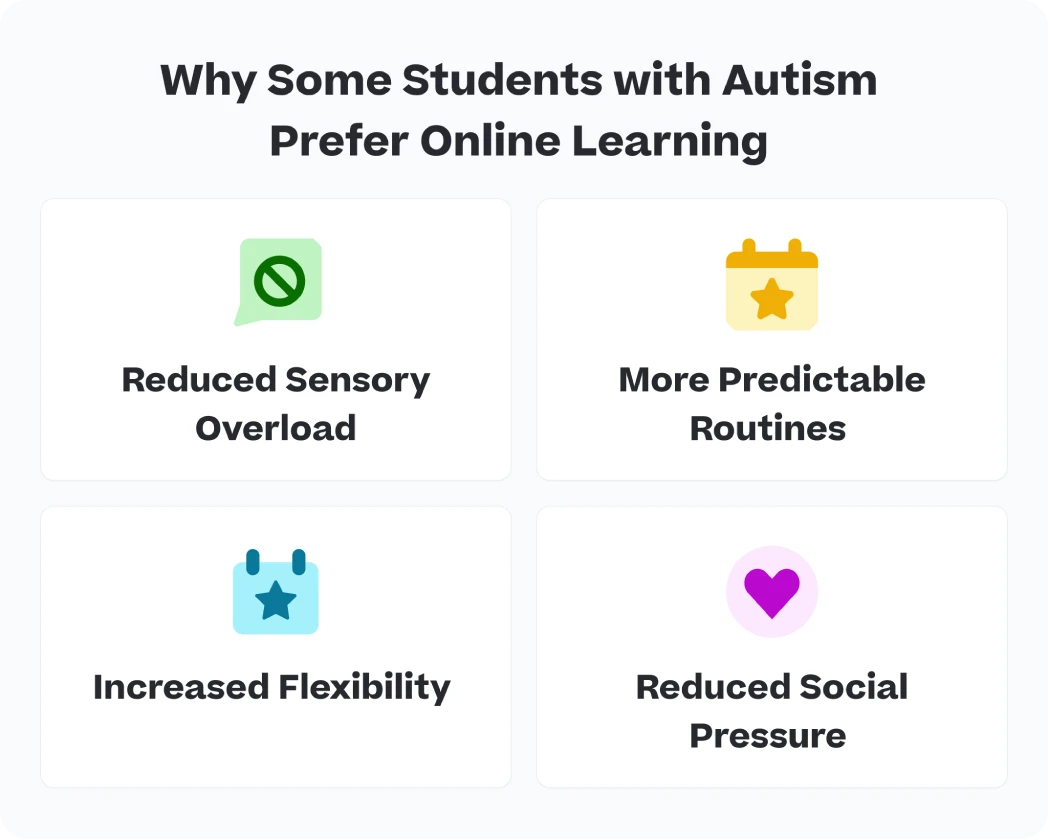
For parents of children with autism, deciding between traditional school and online school isn’t always easy. As you compare, some factors to consider include:
Reduced Sensory Overload
Traditional classrooms may involve fluorescent lighting, crowded spaces, loud transitions, and constant sensory input. For some students with autism, that level of stimulation can become mentally exhausting. Online learning environments, on the contrary, often provide greater control over lighting, sound, seating, movement, and visual distractions. A quieter environment can help some students regulate attention and emotional energy more effectively.
More Predictable Routines
Predictability matters for many learners. Online learning often allows for consistent schedules, fewer physical transitions, clearer visual calendars, advance access to assignments, and replayable lessons. This type of structure may help reduce anxiety around unexpected changes.
Increased Flexibility
Some students work best during specific times of the day. They may need frequent movement breaks, shorter learning intervals, and flexible pacing. In an online school setting, structured online learning and autism support may allow students to engage with coursework in ways that feel more manageable and individualized.
Reduced Social Pressure
Not all students with autism struggle socially, but some experience bullying, social exhaustion, communication anxiety, or difficulty navigating group dynamics. Virtual learning can sometimes reduce those pressures while still allowing students to participate academically.
For many families, virtual learning may feel like a more supportive option, but that doesn’t mean that online school is easier. It just means that an online learning environment often allows students to focus more energy on learning rather than on managing environmental stresses.
Sensory and Social Considerations
While online learning may reduce certain stressors, it also introduces new considerations families should think through carefully. Some of these sensory and social considerations include:
Screen Time and Fatigue
Some students may become overwhelmed by extended screen exposure. Others may struggle with virtual meeting fatigue, visual processing overload, audio sensitivity, and multitasking demands during live instruction. Supportive online schools often recognize this and incorporate breaks, flexible pacing, offline assignments, and visual supports to counter the fatigue.
Social Interaction Still Matters
One common misconception is that online school means social isolation. In reality, many programs include virtual clubs, discussion groups, collaborative projects, live classes, and optional in-person events. However, the level (and type) of interaction varies widely between schools. Some students enjoy virtual interaction because it reduces social pressure, allows more processing time, and limits overwhelming group dynamics. Others may benefit from face-to-face peer connections. The key is understanding your child’s individual needs rather than assuming one approach works for everyone.
Emotional Regulation
Even in supportive environments, students may still experience frustration, emotional overwhelm, shutdowns, transition difficulties, and anxiety around changes. Families often benefit from having consistent communication plans with educators to address challenges early.
Structure and Routine in Virtual Learning
Routine is often one of the most important factors in online learning success. Many students with autism benefit from clear expectations and predictable rhythms throughout the day.
Visual Schedules and Calendars
Online platforms frequently include assignment calendars, progress trackers, checklists, daily schedules, and reminder systems. Visual organization tools can help students anticipate transitions, prepare mentally for tasks, reduce uncertainty, and build independence.
Consistent Learning Spaces
Some families create learning spaces that reduce sensory distractions and support focus. This may include headphones, flexible seating, dimmer lighting, calming sensory tools, or quieter work areas that help students feel more comfortable during instruction.
Replayable Instruction
Recorded lessons can help students review information at their own pace, pause instruction, revisit difficult concepts, and reduce anxiety around missing details. This flexibility may be especially helpful for students who process information differently or need additional repetition. Families researching supporting attention and focus online often find replayable instruction helpful for multiple learning profiles, including ADHD and executive functioning challenges.
Common Accommodations and Supports
Online accommodations for students with autism vary depending on the student’s needs and the school’s available services. Some students may have individualized education program (IEP) services, 504 plans, or informal classroom accommodations. Others may receive informal accommodations through teacher collaboration.
Common Examples of Accommodations
Some common examples of accommodations include extended assignment time, reduced-distraction testing, visual supports, modified communication methods, movement breaks, flexible participation options, smaller-group instruction, and sensory support. The goal is not to create identical experiences for every student. It is to provide meaningful access to learning.
Related Services
Depending on the program and the student’s needs, related services might include speech-language therapy, occupational therapy consultations, counseling services, behavioral support, or social skills instruction. Families wanting to understand online IEP support services may notice overlap between accommodations and broader special education supports.
Communication Flexibility
Some students may feel more comfortable participating through chat, written responses, smaller group settings, or asynchronous activities instead of frequent verbal participation.
Communication Between Families and Schools
Strong communication is often one of the most important parts of successful online learning. Because learning happens at home, families may notice patterns more quickly than they would in traditional settings. For example, parents may observe:
- Sensory overwhelm
- Emotional fatigue
- Frustration with transitions
- Assignment avoidance
- Communication difficulties
Some families may notice their child becoming overwhelmed during live lessons, avoiding assignments, shutting down emotionally, or struggling with unexpected schedule changes. Consistent communication with teachers can help address these concerns before they escalate. When challenges arise, supportive schools often work collaboratively with families to adjust schedules, pacing, accommodations, communication systems, or workload expectations. This flexibility can be especially valuable when student needs evolve over time.
Families should not feel pressured to make students with autism fit one narrow definition of “successful learning.” Some students may participate verbally while others communicate primarily through writing, need additional processing time, prefer independent work, or thrive in small-group settings.
Signs an Online Environment May Be a Good Fit
Some students with autism may benefit from online learning environments that offer quieter surroundings, reduced sensory overload, predictable routines, and flexible pacing. For some students, virtual learning settings may reduce environmental stressors that interfere with focus, participation, and daily learning routines.
At the same time, some students may need intensive in-person therapies, constant hands-on support, highly structured classroom supervision, or face-to-face social development opportunities. The goal is not to prove whether online learning is universally “better.” It is to identify environments where the student can participate meaningfully and feel supported.
Explore Flexible Online Learning Options
While some students with autism thrive online, others do better in traditional schools. And for some students, a hybrid model that combines elements of both can be the ideal learning environment. In the end, the most supportive environments are usually those that respect individual differences, communicate openly with families, adapt thoughtfully, reduce unnecessary barriers, and prioritize student well-being alongside academics.
Understandably, families considering virtual education often want reassurances that their child’s sensory, emotional, and communication needs will be understood and not overlooked. Flexibility, accessibility, individualized accommodations, and collaborative support systems can help some students participate more comfortably and confidently in school.
Explore online learning environments designed to support different learning needs and preferences.
Common Questions Parents Ask About Online School and Autism
Online schools vary significantly in structure and support systems. Families considering virtual learning may want to ask specific questions before enrolling.
How are accommodations implemented online?
Online accommodations may include flexible pacing, recorded lessons, modified assignments, visual supports, smaller-group instruction, communication adjustments, and reduced-distraction testing environments. Families should ask schools for specific examples of how accommodations are delivered virtually.
What sensory supports are available?
Sensory supports vary by school and student needs. Some online programs offer movement breaks, visual schedules, flexible participation options, quieter learning environments, and replayable instruction that allows students to pause and revisit lessons as needed.
How much live instruction is required?
Live instruction requirements differ between programs. Some students thrive with frequent live interaction, while others benefit from more independent or asynchronous learning. Families should ask how flexible the schedule is and whether students can access recorded lessons.
Will my child still have social opportunities?
Many online schools offer virtual clubs, live class discussions, collaborative projects, peer activities, and optional in-person events. The amount and type of social interaction can vary widely between programs, so families should explore which online school opportunities best match their child’s comfort level and communication style.