
 About Us
 Why K12?
 Safety Needs
 How Students Succeed
 FAQs
FAQs Online Elementary School
 Online Middle School
 Career and College Prep
 Online High School
 Student Clubs
 Career and College Services
 Inside the Online Classroom
 A Day in the Life
 Social & Extracurricular
 Advice, Tips & Inspiration
 Benefits for Life
 Enroll
 All School Options
 Need More Help?
Video games have come a long way from simple pixels and joysticks. Today, they’re not just a source of entertainment but a surprising springboard for real-world success.
A new national survey of parents and working professionals looked at the long-term impact of childhood gaming on adult careers, from the skills gamers build early on to how those lessons translate into higher salaries, leadership roles, and job satisfaction. If you’re a parent wondering whether those hours your child spends gaming are time well spent, the answers may surprise you.
Key Takeaways
- More than half of working professionals (52%) believe that their childhood gaming experience helped them develop skills that benefited their career.
- Problem-solving (66%) and strategic thinking (63%) are the top career-relevant skills adults say they learned from gaming as kids.
- 86% of childhood gamers said they easily adjust to new tools and technologies, including AI, compared to 77% of those who did not grow up gaming.
- 44% of working professionals say they’ve applied a lesson they learned in a video game to a real-life work situation.
- 63% of parents would support their child enrolling in an esports league.
- 51% of parents believe video games should be recognized as a legitimate extracurricular activity in schools.
- 80% of parents would support their child majoring in game design or development.
Childhood Gaming and Skill Development
Video games have taught people more than just how to beat the next level. They have also helped build skills that many professionals now credit for their workplace success.
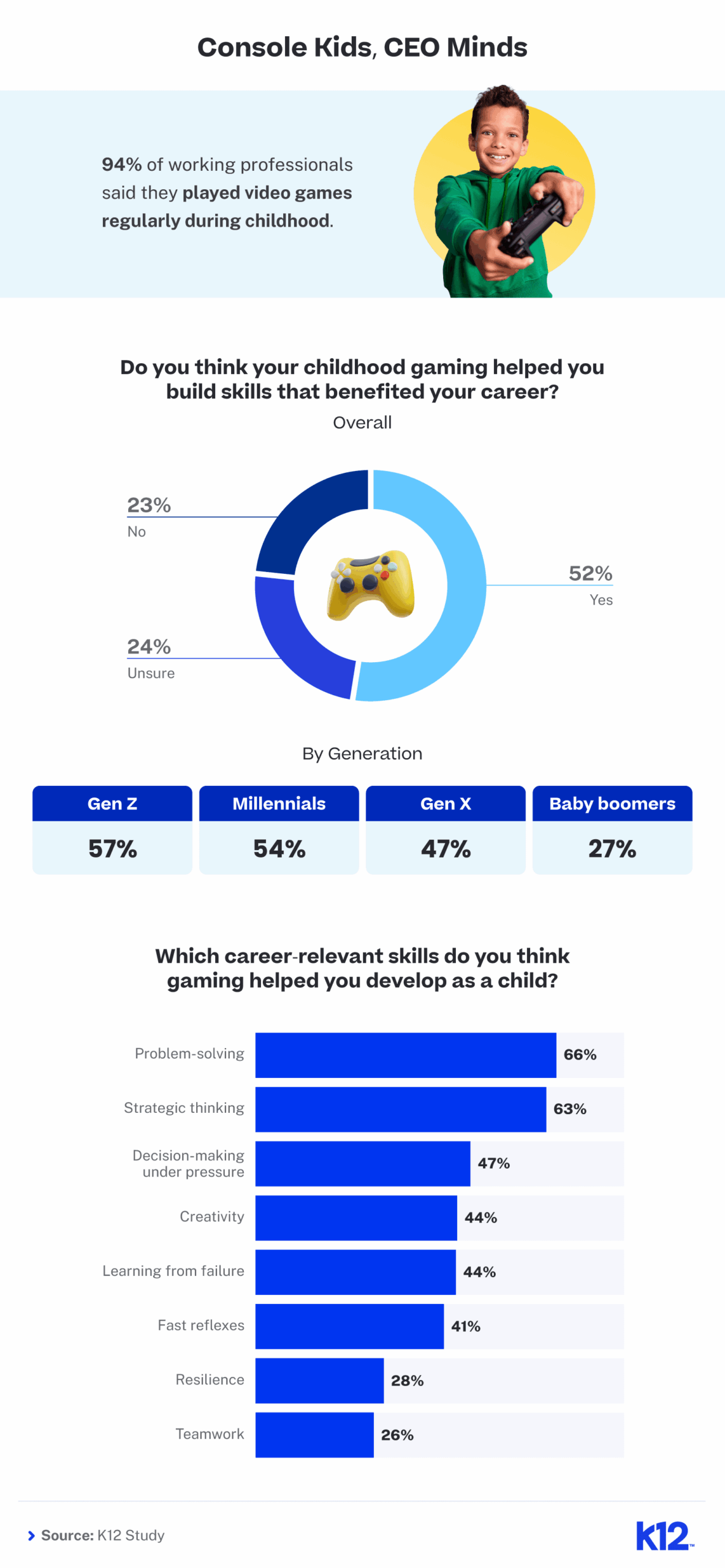
Most adults who gamed during childhood (65%) grew up using consoles like Nintendo, PlayStation, or Xbox. Smaller groups played on PCs (20%) or handheld devices (7%). These early digital experiences may have supported adaptability, as 86% of childhood gamers said they easily adjust to new tools and technologies, including AI, compared to 77% of those who did not grow up gaming.
More than half of working professionals (52%) believed the games they played as kids shaped valuable career skills. The most common benefits were problem-solving (66%) and strategic thinking (63%). Many respondents also pointed to sharper decision-making under pressure (47%) and increased creativity (44%).
Action and adventure titles (67%) topped the list of games that supported skill development, followed by:
- Role-playing (44%)
- Sports and racing (41%)
- Strategy and simulation (34%)
- Puzzle and logic (31%)
- Educational (19%)
Gaming and Career Outcomes
Many adults are finding that the skills they developed through gaming continue to support their careers today.
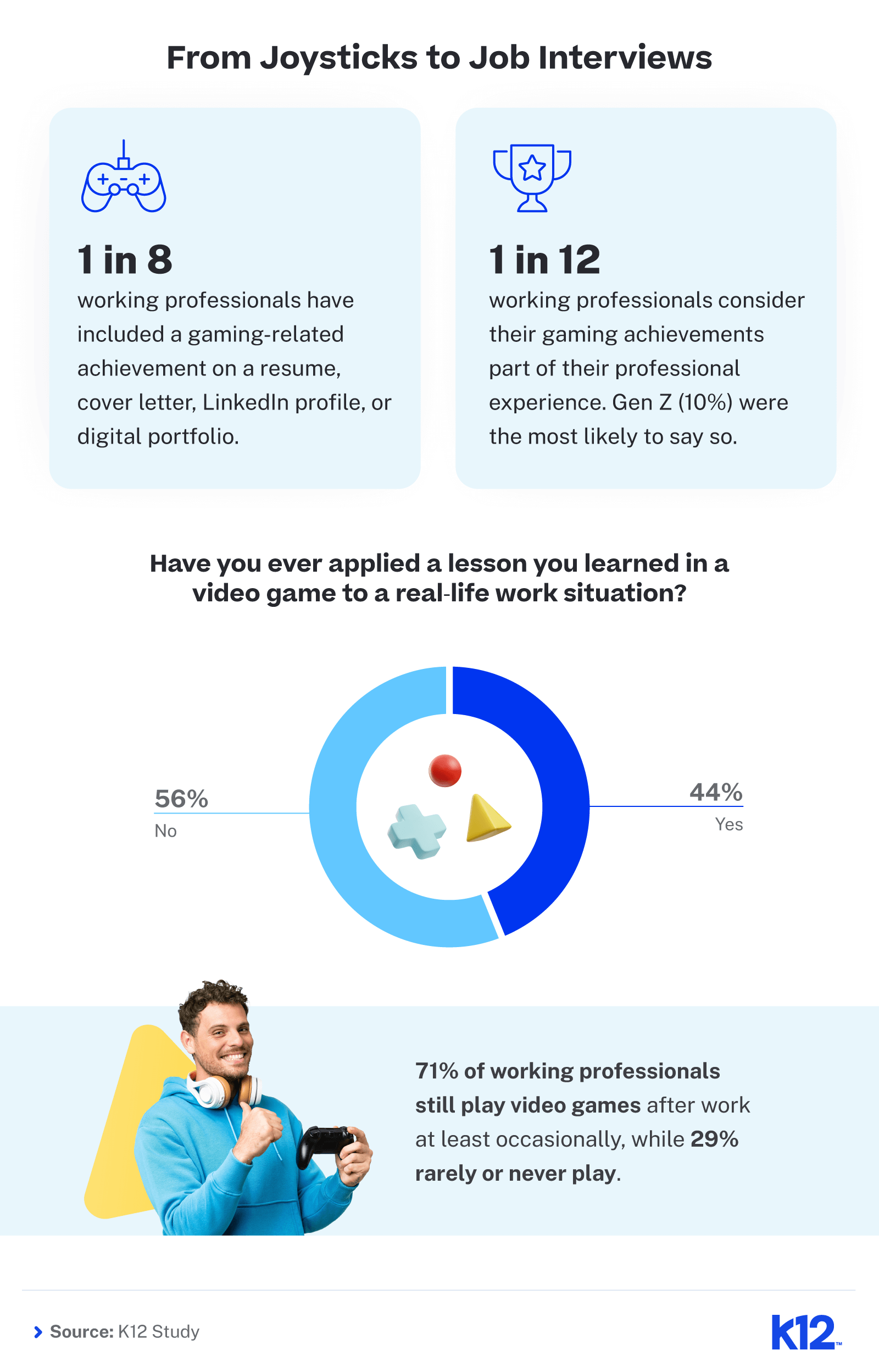
Nearly half of working professionals (44%) said they’ve applied a lesson from a video game to a real-life work challenge. Gen Z did so the most, at 58%. Many workers continue to game as adults, with 71% saying they at least occasionally play video games after work. People who gamed regularly after work were more satisfied with their careers (61%) than those who rarely or never did (55%).
Parents: Attitudes Toward Gaming
Many parents are rethinking the role video games play in their children’s lives, shifting from viewing gaming as a pastime to recognizing its potential for growth and opportunity.
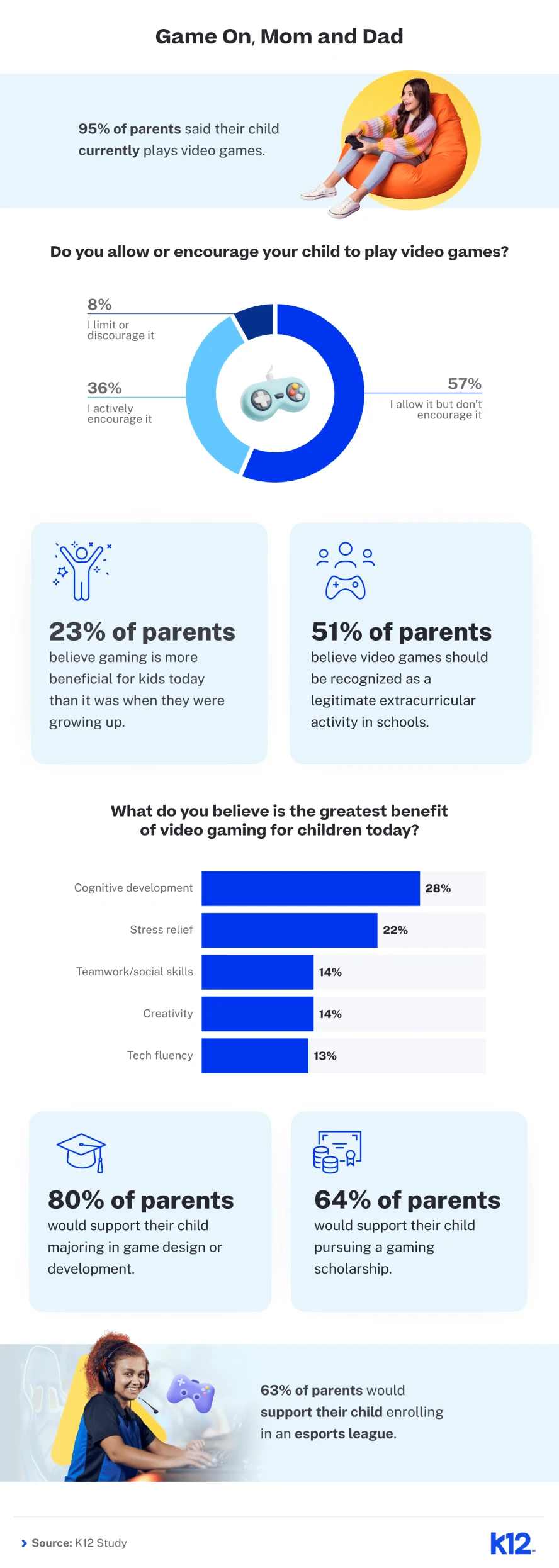
Many parents are open to meeting their children where they are and helping them explore healthy, constructive ways to grow through gaming. More than half (63%) said they would support their child enrolling in an esports league, and 51% believed video games should be recognized as a legitimate extracurricular activity in schools, much like sports or band. And a large majority (80%) said they would support their child pursuing a college major in game design or development.
Parental support has evolved compared to past generations. While 59% said their own parents were supportive of their gaming habits (mostly “somewhat supportive”), today’s parents show a wider range of support for modern gaming opportunities. For example, 58% said they would support their child becoming a professional gamer or streamer. Another 40% would allow their child to play more if they believed gaming could lead to better professional outcomes later in life.
Gaming’s Impact on Future Careers
As this survey shows, the time children spend gaming can offer more benefits than many parents might expect. The problem-solving, creativity, and adaptability kids build while playing often follow them into adulthood, shaping how they learn, work, and navigate new challenges. Many parents today are already recognizing this potential and choosing to support gaming in thoughtful, balanced ways.
If your child enjoys video games, you can feel confident knowing that this interest may be helping them develop skills that matter in school and beyond. With the right guidance, gaming can be more than entertainment. It can be another way for children to grow, explore their strengths, and prepare for future opportunities.
Methodology
A survey of 300 parents and 900 working professionals not affiliated with K12 was conducted in November 2025 to explore how childhood video game habits may relate to adult professional outcomes. The generational breakdown of working professional respondents was as follows: 17% Gen Z, 59% Millennials, 20% Gen X, and 4% Baby Boomers.
Fair Use Statement
This article’s findings are available for noncommercial use with proper attribution. If you share or republish this content, please link back to K12 with credit.