 About Us
 Why K12?
 Safety Needs
 How Students Succeed
 FAQs
FAQs Online Elementary School
 Online Middle School
 Career and College Prep
 Online High School
 Student Clubs
 Career and College Services
 Inside the Online Classroom
 A Day in the Life
 Social & Extracurricular
 Advice, Tips & Inspiration
 Benefits for Life
 Enroll
 All School Options
 Need More Help?
Students in K–12 online school learn the same core subjects as traditional school and have additional opportunities for personalized learning and skill development across:
- Core subjects like English, math, science, and social studies
- Grade-level skills from foundational learning to college prep
- Electives, career pathways, and enrichment opportunities
- Personalized pacing based on student needs
Together, these elements create a flexible but structured learning experience that help parents supports students at every stage of their academic journey.
Online vs. Traditional School Curriculum: Here’s the Difference
Online and traditional schools teach the same core subjects and follow state standards, but how students learn differs.
Key differences include:
- Online students learn from home instead of a classroom
- Lessons include both live classes and self-paced work
- Students can move faster or slower based on their progress
- Parents often play a more active support role
While the subjects remain the same, the flexibility and personalization of online learning allow students to progress in a way that fits their individual needs.
What do students learn in online elementary school (K–5)?

Elementary curriculum builds foundational skills through engaging, interactive learning.
What students learn in elementary school:
- Reading and phonics development
- Foundational math skills (counting, addition, subtraction)
- Basic science concepts through hands-on activities
- Writing skills, from sentences to short paragraphs
- Social emotional development and collaboration
Kindergarten through 2nd grade emphasizes learning to read, basic math concepts, and social emotional development. Students work on phonics, number recognition, counting, and simple addition and subtraction through interactive lessons and activities.
By 3rd through 5th grade, students begin taking greater responsibility for their learning. The focus shifts to critical thinking and problem-solving skills, including analyzing information, evaluating sources, and supporting ideas with evidence. Writing progresses from simple sentences to multi-paragraph compositions.
Math becomes more advanced with multiplication and division fluency, fractions and decimals, and an introduction to algebra. Science includes hands-on exploration of topics like matter, ecosystems, and energy. By 5th grade, students balance live instruction with independent work, preparing them for middle school expectations.
What do students learn in online middle school (Grades 6–8)?
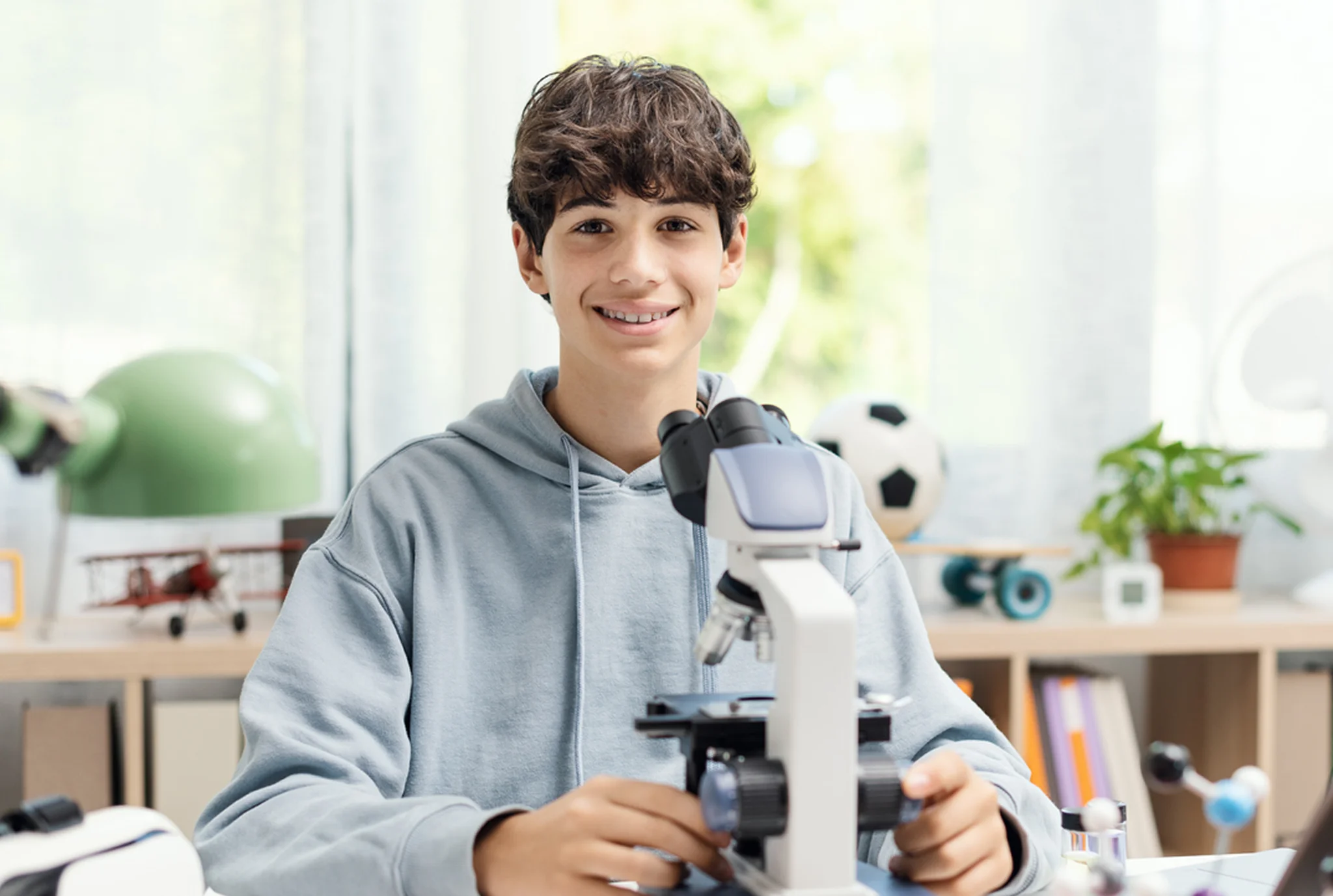
Middle school curriculum prepares students for high school academics through independent learning and critical thinking.
What students learn in online middle school:
- Advanced reading and structured writing
- Pre-algebra, algebra, and problem-solving skills
- Life science, physical science, and lab-based learning
- Time management and independent study skills
- Exploration of electives and personal interests
Students engage more deeply with core subjects while developing study and time-management skills. ELA classes build stronger reading comprehension, structured writing, and analysis of different text types.
Mathematics introduces algebra and more advanced concepts, with some students moving into Algebra 1 and Geometry. Science becomes more focused on topics like cells and life cycles, chemical reactions, energy, and genetics through hands-on and interactive activities.
What do students learn in high school (Grades 9–12)?
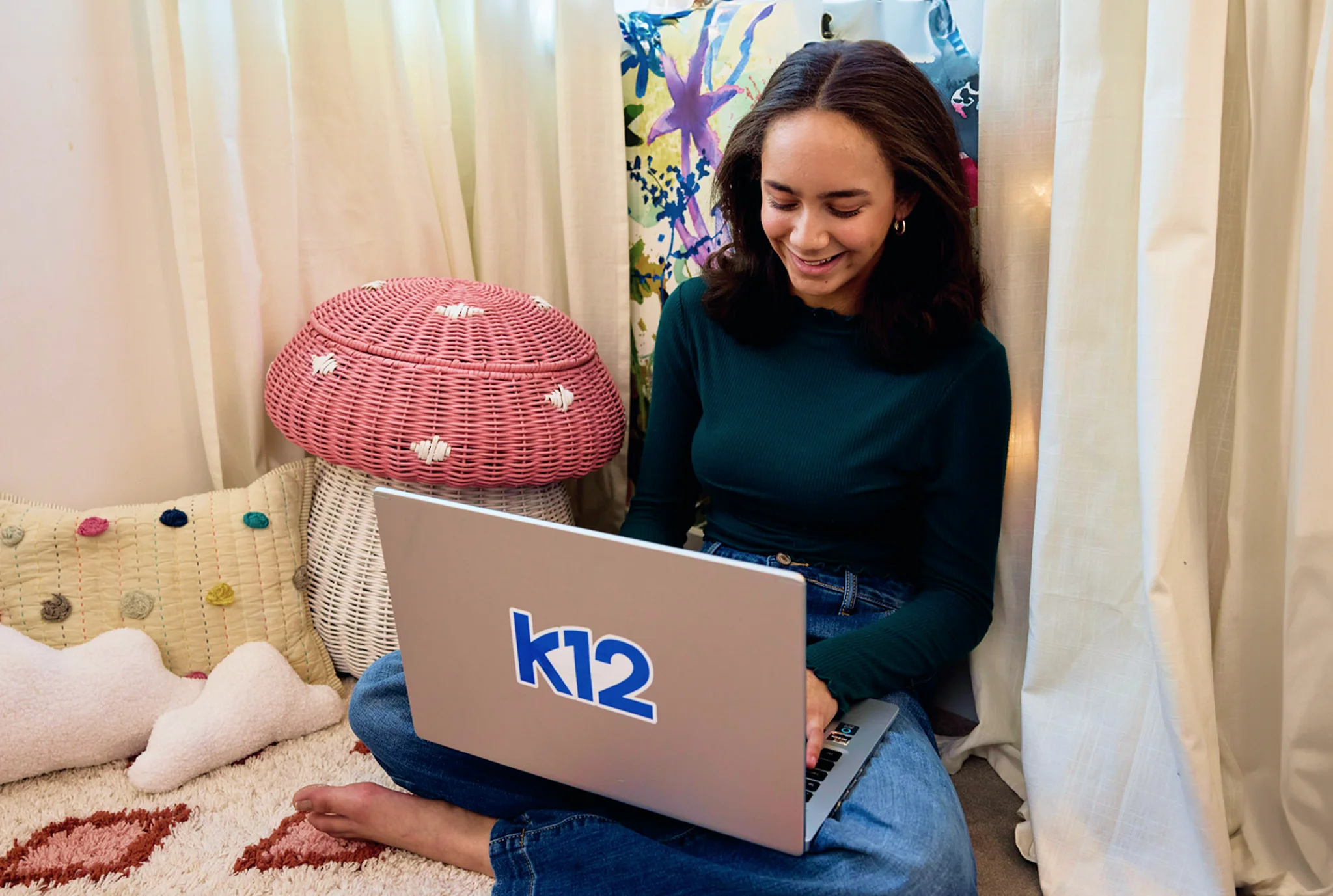
High school curriculum follows graduation requirements aligned with traditional schools while preparing students for college, careers, and life after graduation.
What students learn in online high school:
- Core academic subjects required for graduation
- Advanced coursework, including honors and AP® classes
- College and career readiness skills
- Career and technical education pathways
- Opportunities for certifications or dual enrollment
Students complete courses in English, mathematics, science, and social studies to meet state standards. College-bound students may choose more rigorous options, including advanced math and science courses, additional ELA coursework, and world language study.
Advanced Placement® (AP®) and honors courses allow students to challenge themselves to potentially earn college credit in high school. Common options include subjects like biology, calculus, chemistry, and English literature, helping to demonstrate academic readiness for college admissions.
Career and technical education programs prepare students for both immediate workforce entry and continued education. Students can explore fields such as business, healthcare, information technology, public services, and the arts. Each area combines academic instruction with practical, career-focused learning. Many programs include opportunities to earn industry-recognized certifications while completing graduation requirements.
These options give students flexibility to pursue college, career, or technical pathways based on their goals after graduation.
How does personalized learning work?
Personalized learning means your child doesn’t have to learn the same way as everyone else. Online schools help students build independence over time, which becomes especially important as coursework becomes more self-directed.
To support that transition, many programs intentionally teach study skills that help online students stay organized, manage their time, and succeed across subjects and grade levels. Online schools assess how your child is doing, what helps them learn best, and where they need extra help.
Teachers use this information to build a learning plan that fits your child’s individual needs. A student who quickly understands math concepts can accelerate through content while taking added time to master reading comprehension. Learning platforms track progress in real time and help teachers determine whether a student needs added support or is ready for more advanced material. This flexibility allows students to work at their own pace without feeling rushed or held back.
In addition to academics, online schools create opportunities for students to engage with others by offering a variety of social interaction opportunities. Students can choose what works best for them from participating in group activities and joining interactive clubs. There are multiple ways to build social connections in an online learning environment.
What support is available for the different types of learners?
Online schools provide dedicated support for gifted students through acceleration opportunities, advanced content access, and enrichment activities. High schoolers can enroll in AP® and honors courses, participate in dual enrollment programs to earn college credits early, and access flexible scheduling that allows them to manage their own learning.
Students with special needs receive individualized support through individualized education programs (IEPs) and 504 plans, just like traditional schools. Many families find that online learning reduces challenges such as classroom distractions, social pressures, and rigid pacing. Special education coordinators and teachers work closely with families to ensure students receive the support and adjustments they need. English Language Learners (ELLs) receive added language development instruction, small-group support, and targeted help within core subjects.
Is your child ready for online school curriculum?
Online school curriculum meets the same standards as traditional education while offering personalized pacing and expanded course options. If your child needs flexibility, struggles with the pace of traditional classrooms, or wants access to specialized courses, online learning can be a good fit.
Success is tied to family commitment and support rather than your child’s current academic level. Online schools work with students at all ability levels, from those who need extra support to those ready for advanced challenges. Success often depends on reliable technology, parental involvement (especially for younger students), and a willingness to engage in a different learning environment.
K12-powered schools provide structured lessons and personalized learning pathways guided by certified teachers. Our schools are designed to support students at every grade level.
See how online school works day to day and what to expect as a family.
Common Questions About What Students Learn in Online School
Is the curriculum at online school as academically challenging as traditional school?
Yes. Online schools follow the same state and national academic standards as traditional schools. Students learn the same core subjects and must meet the same graduation requirements. Many online programs offer AP® courses and specialized tracks.
Can my child take AP® courses online?
Yes. Many online high schools offer AP® courses in subjects like biology, calculus, chemistry, and English. Students can earn college credit by passing AP® exams, just like in traditional schools.
What if my child is behind or ahead of their grade level?
Online schools excel at meeting students where they are. Personalized learning plans allow students to catch up in areas where they’re behind while accelerating in subjects they’ve mastered. Teachers adjust pacing and content to match your child’s needs.
Are there hands-on activities in online school?
Yes. Online schools provide hands-on materials like science kits, art supplies, and other materials delivered to your home. Elementary students especially engage in offline, hands-on learning complemented by online lessons. Science courses include lab activities and experiments.
Can my child explore career interests in online school?
Yes. High school students can enroll in career and technical education programs in fields like health science, information technology, business, and arts. These programs provide practical skills and prepare students for industry-recognized certifications.