

 About Us
 Why K12?
 Safety Needs
 How Students Succeed
 FAQs
FAQs Online Elementary School
 Online Middle School
 Career and College Prep
 Online High School
 Student Clubs
 Career and College Services
 Inside the Online Classroom
 A Day in the Life
 Social & Extracurricular
 Advice, Tips & Inspiration
 Benefits for Life
 Enroll
 All School Options
 Need More Help?
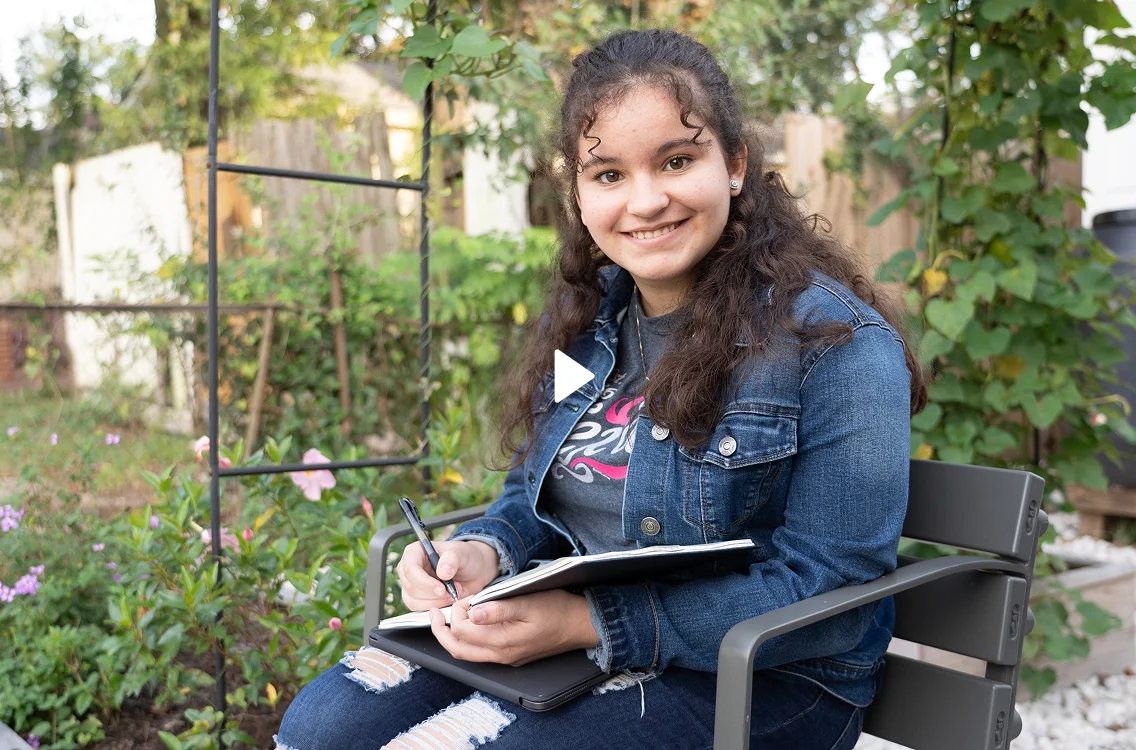
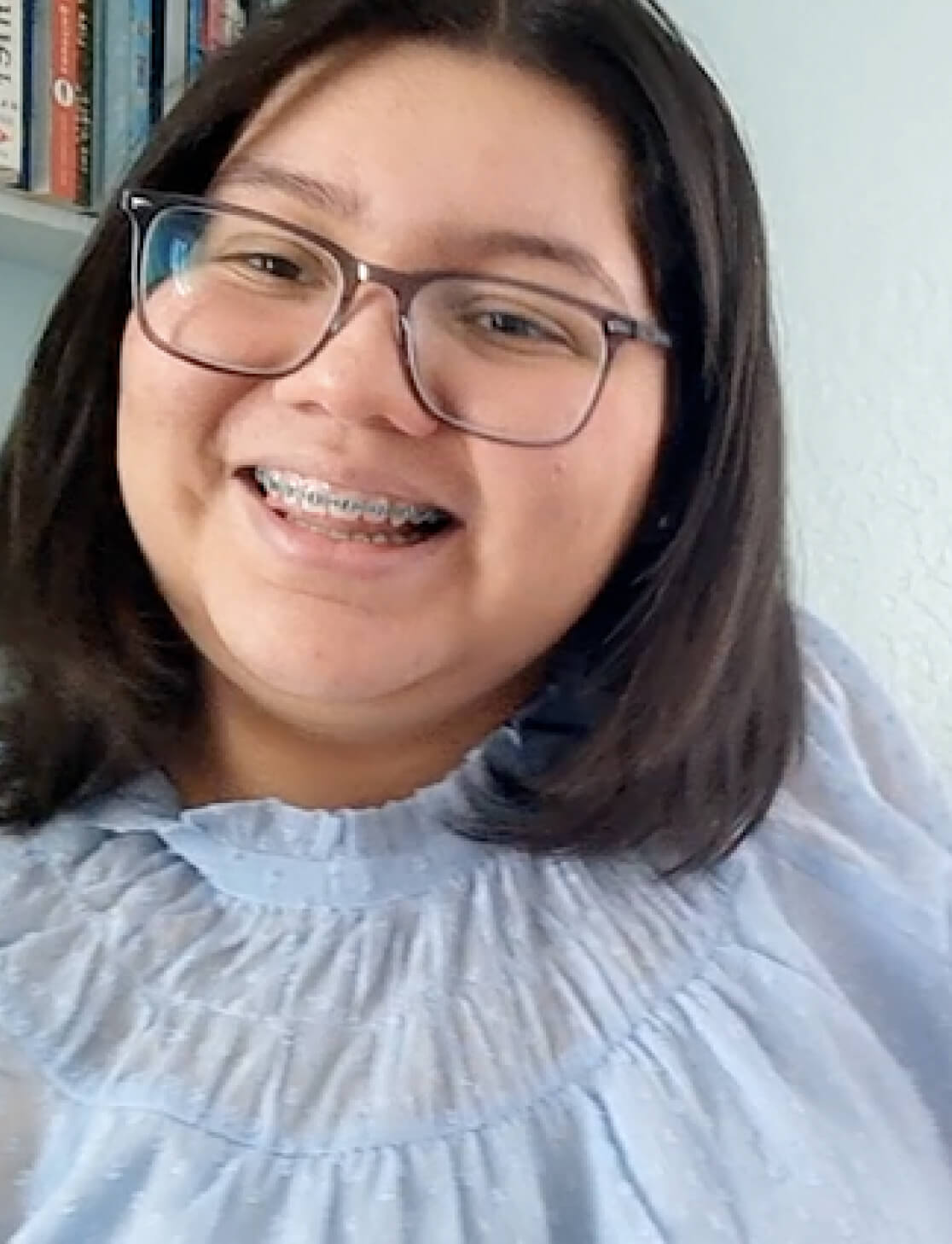
Meet Sabrina
Sabrina needed a safe educational setting where she could learn at her own pace and fall in love with learning—while adapting to a new language and culture. With K12, she feels supported every step of the way.
Why This Family Chose K12
Mom and Learning Coach Mabiel sought a safe learning environment where her daughter could heal from the stress caused by fleeing their home country. K12-powered school provides the flexibility and support Sabrina deserves.

Embrace an empowering environment
Online education gives Sabrina the time and space she needs to adjust to a different way of life in a new country.

Progress at your own rhythm
Sabrina had the flexibility to spend extra time working through assignments while learning a new language, without pressure.

Close learning gaps
With so much upheaval, Sabrina wasn’t able to keep up with her studies. K12 helped her catch up and confidently get back on track.
Flexible Schedule With Live Class Anchors
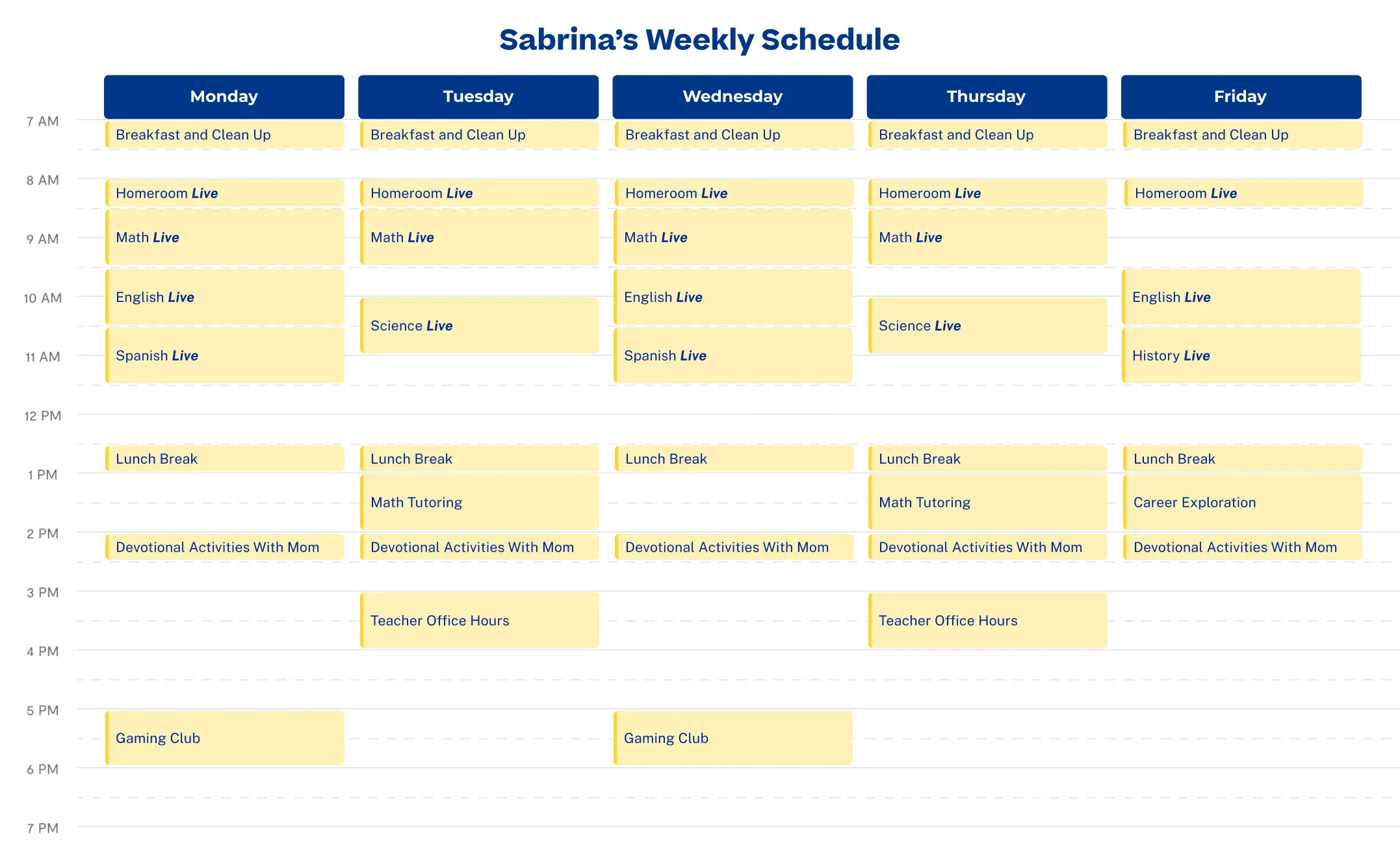
Schoolwork for Sabrina is a mix of scheduled, live online classes and self-guided assignments and activities that can be done at her own pace. If she gets stuck, Mabiel is there to help, or she can ask the teachers questions in live classes, email, or office hours.
One of the benefits of learning with K12 is that educational materials are provided, such as a computer, textbooks, supplies for offline activities, and more!
Curriculum
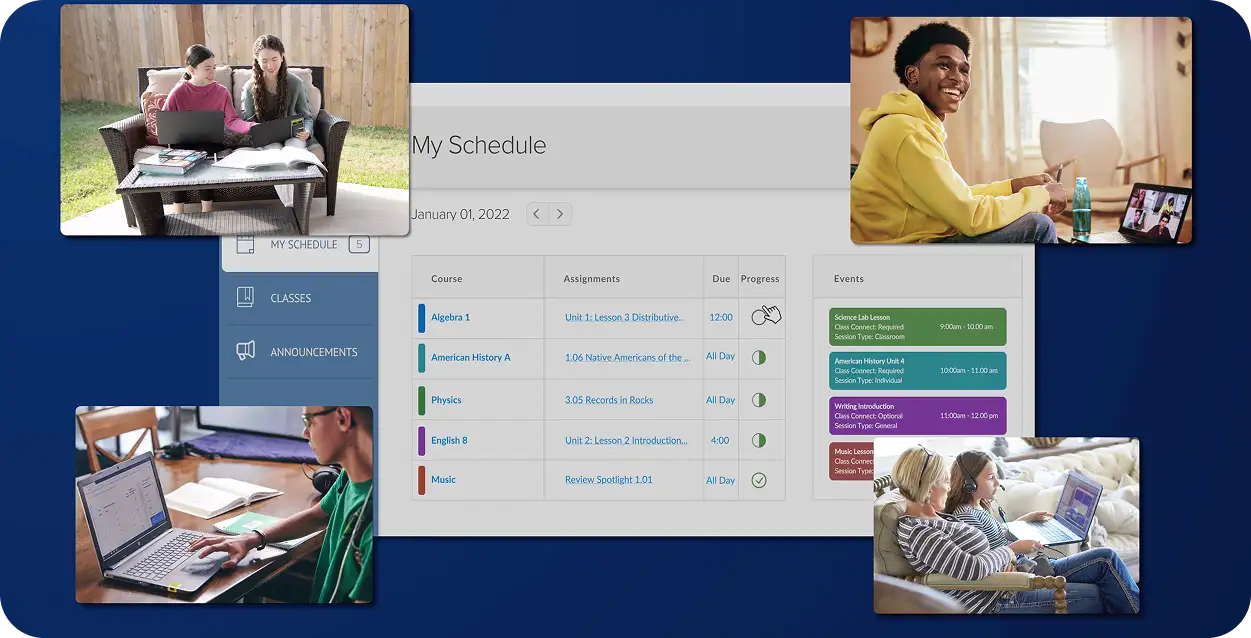
The number of classes students take varies per grade level and individual. For example, middle school students like Sabrina typically take 5–6 subjects each semester, with maybe 2–4 of those requiring scheduled, live classes.
In addition to core academic subjects, there’s a great selection of electives, including career exploration in some middle schools.
The Parent Experience as a Learning Coach
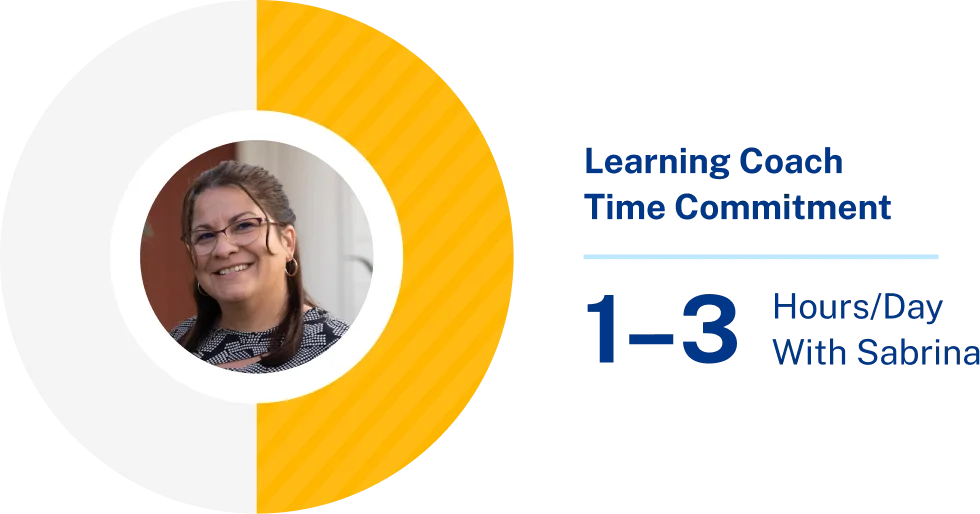
At K12-powered schools, parents (or other responsible adults) act as Learning Coaches for their students. Learning Coaches typically spend 1 to 3 hours a day with middle school students like Sabrina, providing them with structure and organization. She enjoys watching her daughter gain independence and confidence and is nearby if Sabrina ever needs help.
Dedicated Educators Who Engage and Inspire
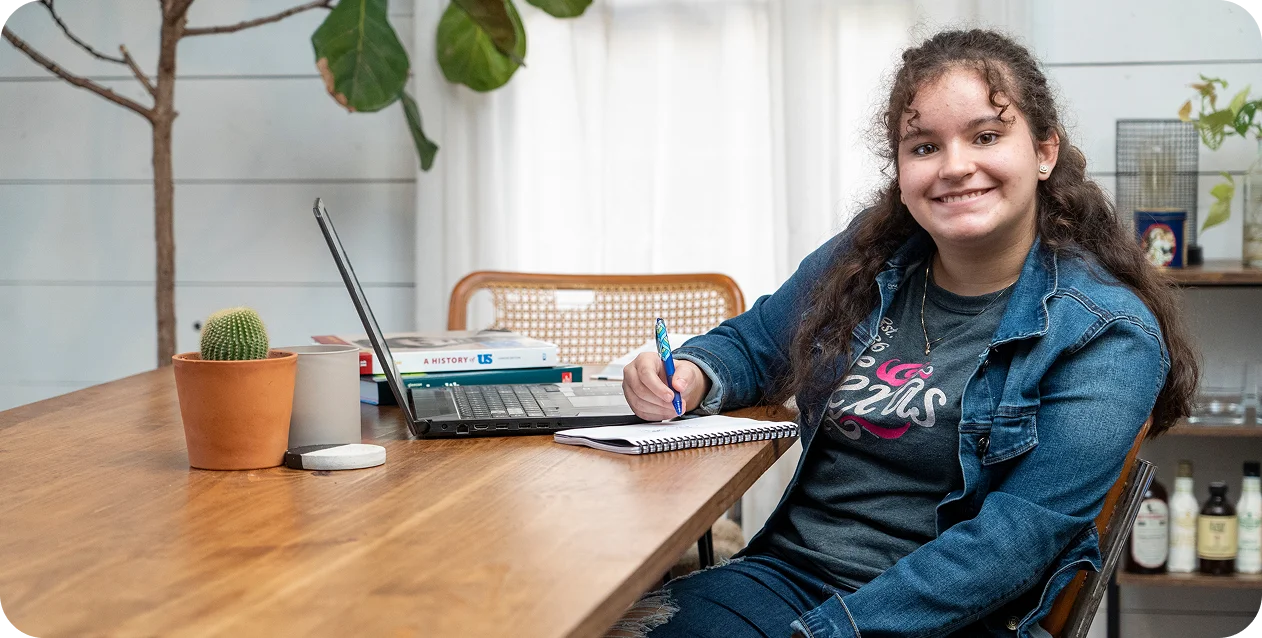
It takes a strong school community to help students succeed. With teachers that pay attention to her unique needs, Sabrina found joy in learning again. Mabiel says they have free-flowing communication with the teachers. That kind of personalized attention really helped Sabrina get the extra support she needed to get back on track and empowers her to thrive.
Teachers who work with K12 are certified in their state and receive special training for virtual instruction. Many schools also have Spanish-speaking support staff.
Family and Faith
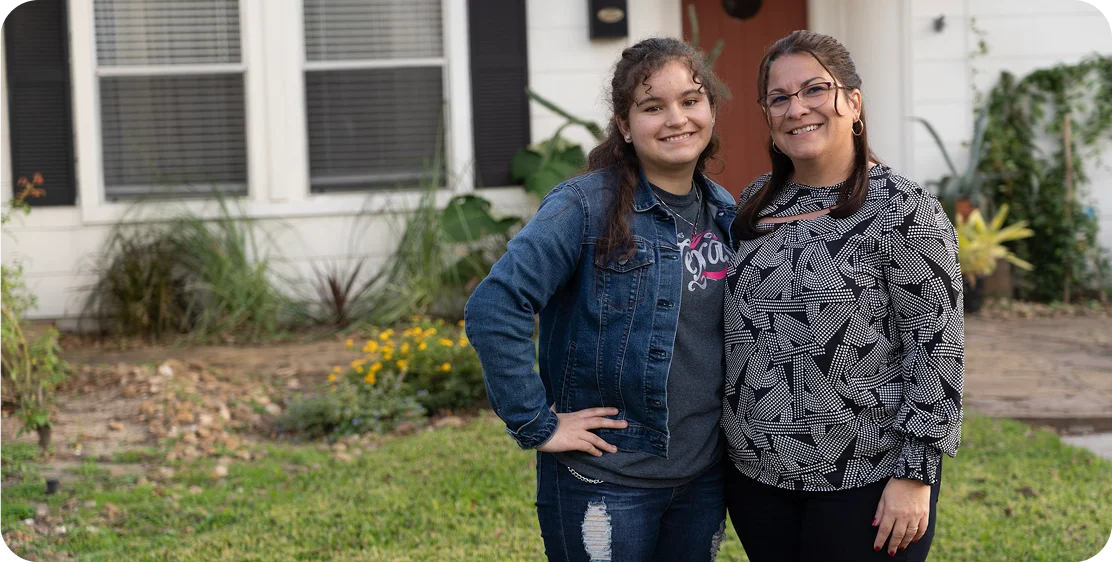
Online school with K12 lets Sabrina spend more time with her family during the week. Mabiel appreciates having more control over what and how Sabrina learns because she can be a part of it. There’s a level of transparency in the schoolwork that Mabiel hadn’t experienced in traditional school. Plus, she can tie in their cultural traditions and faith practices throughout the day.
Family Q&A
Sabrina: Online school is easier for me. The time limits are more flexible. Some things still get caught up in translation, so it’s nice that I don’t have to rush. The classes are recorded, so I can even go back and rewatch if I need to. I also like it because I don’t feel the peer pressure I felt before.
Mabiel: We initially thought K12 was temporary but liked it so much we stayed. Sabrina started taking online courses during the pandemic. She seemed more motivated and wanted to communicate more in English. When we realized she was making progress, I asked how she could do online full time. The transition was great; they had Spanish-speaking support, and they really listened to our concerns.
Sabrina: The teachers are friendly and patient. My teachers really take the time to listen to me and the other students. At my old school, it felt like the teachers heard me but didn’t really listen. My teachers do their best to make learning fun, too. My favorite teacher is my math teacher. She comes up with games and other ways to make math fun. That helps me remember things.
Mabiel: I see a big difference between the teachers at K12 versus our old school. Before, we dealt with teachers who were inflexible, demanding, and sometimes even argumentative when we explained the situation we dealt with while coming from Cuba and how that impacted Sabrina.
Sabrina: I like to play with Tika, my cat. She walks through my workspace when I’m in class. Sometimes, when my grandmother is in the kitchen, I’ll help her cook or bake the cookies she likes. When it’s nice outside, I love to go for walks.
Mabiel: We moved from Cuba so Sabrina could have a better future. She wasn’t supported at her first school in the U.S., and I felt like I couldn’t protect her during her transition to a new country. The teachers didn’t want to listen or offer any solutions. Sabrina was also having some health issues from the stress. I wanted her to be able to learn in a way where she felt safe, so she could rebuild her confidence.
Mabiel: I want other families in the U.S., especially ones like ours who’ve come from other countries, to know that your children can have a great education—and there’s an option out there that will work for them. You have options. Things are different in the United States. Parents can advocate for their children’s education. You can ask questions, request meetings, and even explore other options openly.
Sabrina: My friends and I hang out outside of school. One of our favorite things to do is have pajama parties and watch movies together.
Mabiel: K12 offered Sabrina the ability to catch up academically. They could give her customized support, like math and English tutoring. Plus, all the resources—class materials, books, laptop—were included at no cost to our family. I couldn’t believe it was all tuition-free.
Other Stories You Might Find Helpful

7th Grade
Mari
Mari thrives in an online school with flexibility for medical appointments, hands-on lessons, and social activities through a military co-op.

8th Grade
Josh
Josh’s advanced school schedule makes time for live history and science classes, science experiments, and basketball.
11th Grade
Mia
Mia wants to be a surgeon, and she’s preparing for a healthcare career with support from inspiring and relatable teachers.

Learning With K12
From kindergarten to high school, K12 provides tuition-free online education that empowers students to learn in ways that work for them. Browse options in your state to find the perfect fit for your family.
These are the stories of real students attending K12-powered schools and their families. Content is a combination of direct quotes and summaries from interviews. Their stories each reflect their experiences at their respective schools. Actual experiences can vary by student and school. These pages are designed to reflect a typical day in the life of a student attending an online K12-powered school. Individual class schedules and requirements will vary by state, school, and the individual needs of each student. Course materials vary, and certain schools may not provide computers or may have specific requirements for providing equipment.